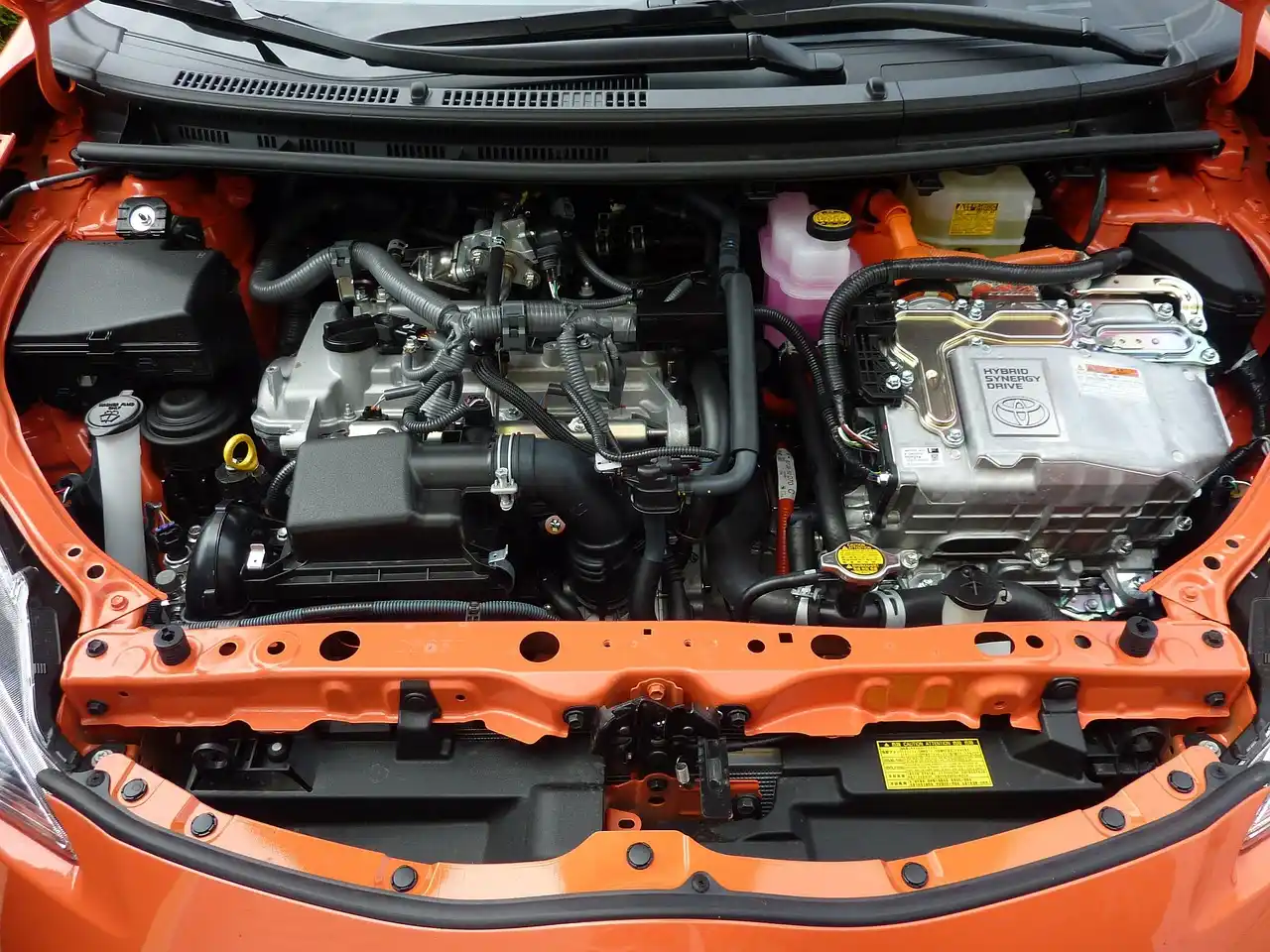
Why are hybrids more efficient than gas cars?
Hybrids often beat gas cars on fuel use because the engine can work in a narrower, more efficient band while the electric motor handles launch, low-speed creep, and stop-start traffic. The largest mpg gains are often reported in city driving, at roughly 20% to 50% better mpg than similar gas models. Ignore that setup, and traffic and short trips waste more fuel. This guide explains why hybrid efficiency works, how full, mild, and plug-in hybrids differ, and when each type saves the most fuel.
How hybrids save fuel
A hybrid powertrain uses a gas engine, electric motor, generator, and battery together, so each part can do the work it handles best. The engine runs less often, and when it does run, it can spend more time near its efficient range instead of idling, crawling, or surging under load.
The engine works less often at inefficient loads
Geotab puts typical passenger-car gasoline engine efficiency at about 20% to 25%. That means much of the fuel energy becomes heat, not motion. A hybrid cuts that waste by using the motor for low-speed driving and by shutting the engine off when the car does not need it.
The engine also has a preferred operating window. Around 2,000 to 2,500 RPM is commonly described as an efficient zone for many passenger-car gasoline engines, and transmissions help keep the engine near that range. In a hybrid, the power split helps the engine stay closer to that sweet spot more often.
The electric motor covers low-speed demand
Electric motors are much more efficient than gasoline engines, with Geotab citing 70% to 95% efficiency. They also make maximum torque from 0 RPM, which is why a hybrid can pull away smoothly without needing the engine to rev into an inefficient band.
Consumer Reports notes that hybrids have electric power at low speeds only. That is enough to cover the expensive part of many trips: pulling away from a stop, inching through traffic, and moving at parking-lot speeds where a gasoline engine would burn fuel poorly.
The battery stores recovered energy for later use
In non-plug-in hybrids, the battery pack is usually small, often around 1 kWh or less. It is not there to replace the gasoline engine. It stores energy recovered during braking and coasting so the motor can use that energy later for acceleration or low-speed travel.
That cycle matters because the car is not creating free energy. It captures energy that would otherwise be lost as heat, then uses it again where it does the most good.
📊 Car and Driver says hybrid batteries are usually no larger than 1 kWh. Source: Caranddriver.
Why the gas engine wastes fuel
A gasoline internal combustion engine has to stay within narrow limits to be efficient. Outside those limits, it wastes fuel at idle, during low-speed crawl, and during hard acceleration. A hybrid trims those losses by shifting more of the awkward work to the electric side.
Typical passenger-car efficiency is only 20%–25%
That number explains a lot of the hybrid advantage. In a conventional gas car, the engine does all the work, even when the car is stopped in traffic or creeping forward at low speed. A hybrid can avoid some of that waste by simply not running the engine when it is not needed.
Why 2,000–2,500 RPM matters
The engine is happiest when load and speed are balanced. At low RPM and light load, it may spin while producing little useful work. At higher RPM, it can burn extra fuel to deliver power that the car may not need. Hybrids use motor assist and battery power to keep the engine in its efficient zone more often.
Idle fuel burn and low-speed inefficiency
The same source says hybrids can turn off the ICE during idling. That matters because a gas engine burns fuel while stopped unless it is shut off. In traffic lights, drive-thrus, school pickup lines, and delivery routes, that idle time adds up.
Picture a suburban commute of about 12 miles with several stoplights and a couple of slow merges. A conventional car may keep idling and revving back up from each stop. A hybrid can shut the engine off at lights, then use the motor for the first part of each launch, which cuts wasted fuel from repeated stop-start events.
What regenerative braking changes
Regenerative braking recovers energy during braking, coasting, and downhill driving and sends it back to the battery. In a gas car, that same energy becomes heat in the brake pads and rotors. In a hybrid, some of it becomes later acceleration instead of being thrown away.
Energy that becomes heat in a gas car
Every time a conventional car slows down, it sheds kinetic energy. The friction brakes turn that motion into heat. That is normal and useful for stopping, but it does nothing to move the car later.
How hybrids turn braking into charge
The same source says hybrids can use regenerative braking to recover energy. The motor becomes a generator during deceleration, and the battery stores the charge. Car and Driver notes that regen can delay engine restart until around 25 mph in some hybrid setups, which helps the car stay in electric mode longer after a stop.
Many hybrids blend regen with friction brakes. The system uses regen first when conditions allow, then brings in the brake pads when stronger stopping power is needed. That blend preserves normal braking feel while recovering some energy.
Why this helps city driving most
City routes have more braking events, more coasting, and more changes in speed. That gives the system more chances to recover energy. Highway driving has fewer slowdowns, so there is less energy to recapture.
Hybrid efficiency matchup table
| Driving situation | What the gas engine would waste in a gas car | What the hybrid does instead | Why fuel use drops | Who benefits most |
|---|---|---|---|---|
| Stoplight-heavy city commute | Idle fuel burn and repeated low-speed re-acceleration | Shuts the engine off, uses electric launch, then restarts only when needed | The engine runs less at zero mph and low load | City commuters, ride-share drivers |
| Creeping in traffic | Engine spins with little useful output | Motor moves the car at low speeds | Electric drive is far more efficient than light-load gasoline operation | City commuters, suburban drivers |
| Braking for a light or downhill stretch | Kinetic energy becomes brake heat | Regenerative braking sends some energy to the battery | Recovered charge can power the next launch | City commuters, hilly-route drivers |
| Hard acceleration from a stop | Engine may rev out of its efficient band | Motor adds torque immediately while the engine stays calmer | The engine can stay nearer 2,000–2,500 RPM instead of roaring high | Suburban drivers, ride-share drivers |
| Long steady highway trip | Engine waste is lower already, so the gap narrows | Motor assists less, regen opportunities are fewer | Less braking means less recovered energy | Highway drivers |
Parallel, series, and plug-in hybrids by efficiency source
| Hybrid type | Where it gains efficiency | Where it can lose some efficiency | Best fit |
|---|---|---|---|
| Parallel hybrid | Electric drive at low speeds, engine support at cruising speeds | Less gain when cruising steadily for long periods | Daily commuting and mixed driving |
| Series hybrid | Wheels are electrically driven at all speeds, so the motor can smooth delivery | Extra gasoline-to-electric conversion can reduce efficiency | Urban routes with frequent stop-start use |
| Plug-in hybrid | Short trips can run on electricity first, then gas extends range | Savings depend on charging habits and whether the battery is actually charged | Drivers with regular access to charging |
Why are hybrids more efficient in the city?
Hybrids are more efficient in the city because city driving has more stopping, starting, and low-speed operation. That lets the electric motor handle the least efficient parts of the trip while regenerative braking recovers energy that would otherwise be lost as heat.
Stop-and-go traffic favors electric assist
In traffic, a gasoline engine spends more time idling or running lightly loaded, which is a poor use of fuel. The hybrid motor can take over low-speed crawling and launch the car from a stop without forcing the engine to work hard from zero.
Idle shutoff matters more at low speeds
When a car is moving slowly, the engine’s fuel use looks worse relative to the distance covered. Shutting it off at stops removes that waste. Geotab specifically notes that hybrids can turn off the ICE during idling, which is why city routes tend to show the largest gains.
Short trips can still limit the gain
A hybrid does not always reach its full advantage on very short trips, especially if the engine is still warming up or the route has only a few braking events. The car still helps, but the smaller the trip, the less time it has to recover energy and run in its sweet spot.
Say your daily route is a 4-mile school run with two stops and one long light. A hybrid may still save fuel, but the engine may not stay in its efficient zone long enough for the full benefit to show up. The same car on a longer urban commute usually does better.
Why are hybrids less efficient on the highway?
Hybrids are usually less advantaged on the highway because steady cruising reduces braking, coasting, and engine shutoff opportunities. The gas engine is already operating more smoothly at constant speed, so the hybrid has fewer chances to recapture energy or replace engine work with electric drive.
Cruising reduces regen opportunities
Regenerative braking works during slowing, downhill travel, and coasting. Highway driving has less of that. If the road is flat and traffic is steady, the battery sees fewer charge-and-discharge cycles from braking events.
Engine load becomes steadier
A gasoline engine is less penalized at a constant highway speed than in stop-and-go traffic. That does not erase the hybrid advantage, but it narrows it. The motor still helps, yet it is doing less of the special work that makes hybrids stand out in town.
When highway speed still helps a hybrid
Hybrids can still do well on mixed routes with grades, traffic, and exits, because the engine can spend more time near its efficient range. The advantage just shrinks compared with dense city use. For shoppers, that means route pattern matters as much as the badge on the hatch.
Why do hybrid types differ?
Hybrid architecture changes where the efficiency gain comes from. Parallel hybrids, series hybrids, and plug-in hybrids all reduce fuel use, but they do it in different ways and with different tradeoffs. That matters if you drive mostly city streets, mostly highways, or very short daily trips.
Parallel hybrids and everyday efficiency
Parallel hybrids are the most common architecture. They can use the electric motor, the gas engine, or both. They often use electric drive at lower speeds, then hand more of the work to the engine at cruising speeds. That makes them a strong all-around choice.
Series hybrids and conversion losses
In a series hybrid, the wheels are electrically driven at all speeds, and the engine powers a generator instead of the wheels. The smooth power delivery is appealing, but the extra gasoline-to-electric conversion can reduce efficiency. That is why the architecture can shine in some city use yet lose ground in some steady-speed situations.
Plug-in hybrids and charging habits
The same source says plug-in hybrids can offer 20 to 40 miles of electric-only range. They can also extend range by about 300 to 500 miles on gas. Consumer Reports also says hybrids do not need to be plugged in, which is the key difference here: a PHEV can save a lot if you charge it often, but its fuel savings depend on charging habits.
How much money can a hybrid save versus a gas car?
There is no universal dollar figure, because fuel savings depend on annual miles, traffic mix, local fuel prices, and how often the car runs in electric-assist mode. Consumer Reports estimates hybrids can save $300-$800 per year in fuel costs versus gas cars, but the exact result changes with the route.
Consumer Reports also says hybrids may cost $0-$3,000 more than equivalent gas cars. That means the payback question is route-specific. A high-mileage commuter in traffic is more likely to see a faster payoff than a driver who spends most of the year on long, steady highways. (Consumerreports)
- Estimate your annual miles.
- Split those miles into city, suburban, and highway driving.
- Check the EPA fuel economy rating for both versions of the vehicle.
- Multiply the mpg gap by your fuel price and annual mileage.
- Compare the fuel savings with any upfront price difference.
The EPA fuel economy rating is still the best common benchmark for comparing hybrids and gas cars. It gives you a starting point for annual fuel cost, but real-world results vary with traffic, temperature, hills, cargo, and driving style. A gentle driver in a crowded city will usually see more benefit than a fast-moving highway commuter.
Do hybrids use gas all the time?
No. Most non-plug-in hybrids do not use gas all the time. They can run on electric power at low speeds, shut the engine off at stops, and use the motor for brief launches. But the gas engine still runs often under load, at highway speeds, and whenever the battery needs charging.
That is the key point for first-time buyers: a hybrid is not an electric-only car with backup gas. It is a fuel-saving system that shares the work between two power sources. The engine is still central, just used more selectively.
Why are hybrids faster than gas cars?
They are not always faster. Some hybrids feel quicker off the line because the electric motor delivers maximum torque from 0 RPM, but straight-line performance depends on the specific vehicle, power output, gearing, and weight. Efficiency and acceleration are related, but they are not the same question.
Frequently asked questions
Why are hybrids more fuel efficient than conventional cars?
Hybrids are more efficient because they avoid wasting fuel in the parts of driving that are hardest on a gas engine: idle, low-speed crawl, and launch. The electric motor handles those moments, while the gasoline engine can stay closer to its efficient range more often.
How do hybrids save fuel in stop-and-go traffic?
They save fuel by shutting the engine off at stops, using electric drive to creep forward, and recovering energy through regenerative braking. Stop-and-go traffic creates many chances to use those features, which is why hybrids usually do best in crowded city driving.
What is regenerative braking and how does it help efficiency?
Regenerative braking turns slowing down into battery charge instead of heat. The motor acts as a generator during braking, coasting, and downhill driving. That recovered energy can help with the next acceleration, which lowers fuel use, especially on routes with lots of stops.
Why are hybrids more efficient in the city than on the highway?
City routes give hybrids more braking events, more idle time to eliminate, and more low-speed driving where the motor can help most. Highway cruising is steadier and gives the system fewer chances to recover energy, so the hybrid advantage usually shrinks.