What Is Level 1 Charging and How Fast Is It?
Level 1 charging uses a standard 120-volt outlet and usually adds about 3 to 5 miles of range per hour. That works best when your daily driving is light and the car can sit plugged in overnight. If you misjudge the pace, you can wake up short on range and end up using public chargers more often than planned. This guide explains what Level 1 charging is, how fast it really is, and how to tell whether it fits your commute. (Thedrive)
How a Level 1 setup works
Level 1 charging is commonly described as AC charging from a standard 120-volt household outlet. It is the slowest common home charging method, but it can work for light daily mileage, overnight top-ups, or drivers who park for many hours at a time.
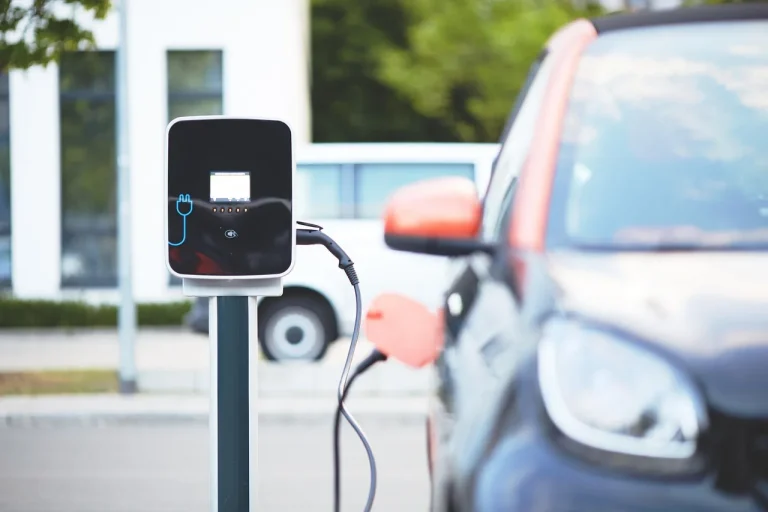
The outlet is only one part of the setup. The EVSE, or Electric Vehicle Supply Equipment, is the wall equipment or charging cable hardware that sends AC power to the vehicle. The car then uses its onboard charger to convert that AC power for the battery, and that onboard charger can cap the speed.
How does a 120-volt outlet power AC charging?
A 120-volt outlet is the common U.S. residential power source used for basic Level 1 charging, and it does not need special installation for that purpose. That makes it the easiest place to start if you want to charge at home without adding a new circuit right away.
What matters next is the continuous draw, not the outlet label alone. A setup can be safe on a household circuit and still charge slowly, because Level 1 is built around modest power delivery over a long stretch of time rather than a quick refill.
What does the EVSE do in a Level 1 setup?
The EVSE is the safety and control hardware between the outlet and the car. It communicates the available current, then supplies AC power in a way the vehicle can accept. On many EVs, the plug at the car side is J1772 for AC charging, while newer vehicles and equipment may use J3400/NACS for AC support depending on the model and gear.
That connector detail matters, but it does not change the basic pace of Level 1. The car’s charging hardware still sets the ceiling.
How fast is level 1 charging?
Level 1 charging is slow by design. A practical estimate is about 3 to 5 miles of range per hour, and a full night of charging typically restores about 30 to 50 miles. That is enough for some commutes, but not enough for every driver.
The best question is not “How fast is it?” in the abstract. It is whether the car is full by morning, with enough margin left for cold weather, detours, and battery losses.
What typical range does level 1 add per hour?
Level 1 typically adds 3 to 5 miles of range per hour. The U.S. Department of Energy describes Level 1 as the slowest common charging option, and practical estimates used by EV education sources place it in that 3 to 5 miles per hour range. That is the right starting point for shoppers who want a simple home-charging estimate.
That pace lines up with the low power draw of a 120-volt setup. At 8 amps, the draw is about 0.96 kilowatts, and at 12 amps it is about 1.44 kilowatts, which is enough to recover miles slowly over many hours, not quickly in a short stop.
Why do vehicle and equipment limits change the rate?
Not every EV accepts the same AC power on Level 1. The onboard charger inside the vehicle decides how much AC power the car can take, so a higher-output EVSE may not make the car charge any faster. That is a common point of confusion.
Connector choice also matters for compatibility, but not for speed by itself. The charger, the car, and charging losses all shape the result.
Is level 1 charging enough overnight?
It can be, if your overnight window is long enough and your daily miles stay within the range Level 1 can recover. In a typical 8- to 12-hour overnight window, a standard 12-amp Level 1 setup usually adds enough range for light commuting, but the actual result varies with vehicle efficiency, weather, battery state, and charging losses.
The key question is not whether Level 1 works in theory. It is whether your car will be ready by morning with enough reserve for the next day.
What assumptions should you use for a Level 1 fit check?
Use a simple assumption set: 8 to 12 hours plugged in overnight, a typical 12-amp Level 1 setup, and real-world range recovery that varies with efficiency, weather, and charging losses. Those assumptions keep the estimate realistic without pretending every EV behaves the same.
Level 1 charging fit table
Use this table as a quick fit check, not a guarantee. It assumes an 8- to 12-hour overnight window, a typical 12-amp Level 1 setup, and a recovery rate that can change with vehicle efficiency, weather, and charging losses.
| Daily miles driven | Estimated miles recovered overnight | Likely outcome | Short recommendation |
|---|---|---|---|
| 10 to 20 | 30 to 50 | Sufficient | Good fit for light commuters and overnight top-ups. |
| 20 to 35 | 30 to 50 | Sufficient to borderline | Works if the car sits plugged in most nights and you do not drive much extra. |
| 35 to 50 | 30 to 50 | Borderline | Possible for average commuters, but cold weather or errand days can push it short. |
| 50 to 70 | 30 to 50 | Not enough | Higher-mileage drivers should plan on Level 2 or regular public charging. |
Light commuters are the best fit for Level 1. Average commuters may be fine if the car charges for many hours each night and the battery starts the day with some reserve. Higher-mileage drivers usually need more than a 120-volt refill can give.
Say your weekday drive is 18 miles round trip and you plug in for 10 hours overnight. That sits inside the normal Level 1 recovery range, so you should wake up with a comfortable margin. Now change only one thing: a 45-mile round trip. The same outlet may no longer catch up, especially if you also run the heater.
What affects the charging rate?
Several specific factors change how much range you get from Level 1 charging. The biggest are the vehicle’s onboard charger limit, the charging losses between the outlet and battery, and the conditions around the car. Cold weather can cut range and slow the practical recovery pace.
What are onboard charger limits?
The onboard charger is the vehicle component that limits AC charging speed. If the car only accepts a modest amount of AC power, a stronger EVSE does not help. That is why one EV may crawl on Level 1 while another gains range a little faster from the same outlet.
For shoppers, this means the vehicle spec sheet matters as much as the wall equipment. A better plug does not fix a low AC limit inside the car.
How do battery size, temperature, and charging losses affect Level 1?
Larger batteries take longer to refill from a Level 1 outlet, even if the miles-per-hour estimate looks similar on paper. Cold temperatures can also reduce range and make overnight recovery less useful in real life. Charging losses matter too, because not every watt from the outlet ends up in the pack.
- Check your daily miles, including errands after work.
- Estimate whether you park for 8 to 12 hours most nights.
- Compare your commute to the 30 to 50 miles Level 1 usually restores overnight.
- If winter or extra driving often pushes you past that margin, plan for Level 2.
How does Level 1 compare with Level 2 and DC fast charging?
Level 1 uses 120 volts and is slow. Level 2 uses 240-volt service and is much faster, which is why it is often the next step when overnight charging cannot keep up. DC fast charging uses much higher power for rapid top-ups away from home.
If you want to charge at home efficiently, the comparison below shows where each level usually fits. If you are considering Level 2 equipment, it helps to compare voltage, use case, and overnight recovery before you buy.
| Charging level | Voltage | Typical use case | Approximate power | Overnight mileage recovery |
|---|---|---|---|---|
| Level 1 | 120 V | Overnight home top-ups, light daily driving | About 1.0 to 1.4 kW | About 30 to 50 miles |
| Level 2 | 240 V | Faster home charging, workplace charging, public destination charging | About 3.8 to 11.5 kW, sometimes higher | About 25 to 40 miles per hour |
| DC fast charging | High-voltage DC | Road trips, quick top-ups, public fast charging | Roughly 50 kW and up | Not an overnight charging method; much faster than home AC charging |
When does Level 2 make more sense?
Level 2 starts to make sense when your daily miles regularly outrun a full night on Level 1, or when you need more buffer for cold weather and unplanned driving. It also helps if your battery is large enough that overnight recovery becomes too thin to be practical.
Suppose a driver covers 60 miles on a typical weekday and only has one overnight stop at home. Level 1 may recover part of that, but not enough to refill the battery comfortably before the next day begins. Level 2 closes that gap much faster.
When does level 1 charging work?
Level 1 charging works best when your daily driving is light, your car can stay plugged in for many hours, and you only need to recover a modest amount of range each night. It is a decent fit for overnight top-ups and for drivers who are not draining the battery far below daily use.
It starts to fall short when your commute is longer, your battery is large, or the weather cuts into range. In those cases, the right answer is often Level 2 rather than trying to squeeze more from a 120-volt outlet.
When should you upgrade from Level 1 to Level 2?
Upgrade when you cannot reliably wake up with enough range for the next day, even after a full overnight charge. If you need public charging more often than you expected, or if winter makes Level 1 feel tight, Level 2 is usually the better fit.
A common first-timer mistake is assuming every EV will refill the same way on a wall outlet. That is not how AC charging works. The outlet, EVSE, connector, onboard charger, and battery conditions all shape the result, so the real test is whether the car is ready by morning.
Frequently asked questions
What is level 1 charging?
Level 1 charging is EV charging from a standard 120-volt household outlet. It uses AC power, works with common home wiring, and is the slowest common charging level. It is best viewed as overnight mileage recovery rather than a quick refuel.
How fast is a level 1 charger?
A Level 1 charger usually adds about 3 to 5 miles of range per hour. In practical terms, a full night often restores about 30 to 50 miles. That is enough for some drivers, but it is slow compared with other home charging options.
How long does level 1 charging take?
It depends on how much range you need back and how much power the vehicle accepts. Chevrolet’s published charging information for the Bolt EUV shows that a near-empty battery can take on the order of about 50 hours to fully replenish on Level 1, which illustrates how long a 120-volt outlet can take for a large refill.
How many miles per hour does level 1 charging add?
Most shoppers should plan on about 3 to 5 miles per hour. That estimate is useful because it translates charging into daily use. If you drive 20 miles a day and charge overnight, Level 1 can often keep up. If you drive much more, it may not.
How is level 1 charging different from level 2?
Level 1 uses 120 volts and is slow. Level 2 uses 240 volts and is much faster, often adding 25–40 miles of range per hour at home. Level 2 is the better fit when Level 1 cannot recover enough mileage overnight.
Can level 1 charging keep up with daily driving?
Yes, if your daily driving is light and you can leave the car plugged in for many hours. It is often enough for low-mileage drivers and overnight top-ups. It becomes a poor fit when your commute, errands, or weather repeatedly push you beyond the overnight recovery range.
What outlet do you use for level 1 charging?
You use a standard 120-volt household outlet. In the U.S., that is the common residential outlet type, and basic Level 1 charging does not need special installation. The outlet is only part of the system, though, because the EVSE and the car still set the final charging pace.
Do all EVs charge at the same speed on level 1?
No. The onboard charger inside the vehicle can limit AC charging speed, so two EVs on the same outlet may recover range at different rates. Connector type also matters for compatibility, with J1772 and J3400/NACS covering common North American AC setups depending on the vehicle and equipment.
Is level 1 charging enough for overnight charging?
It can be, but only if your overnight window is long enough for your daily miles. A full night of Level 1 charging typically restores 30 to 50 miles. If you drive less than that and do not need a large buffer, it may be enough.
What is true about level 1 charging?
What is true about Level 1 charging is that it is slow, it uses a standard 120-volt outlet, and it can still be useful for light daily driving. It does not fit every EV owner, and the real test is whether it restores enough miles before the next trip.