What Is a Hybrid Car and How Does It Work?
A hybrid car uses a gasoline engine, an electric motor, and a battery to move the car, with software switching or blending power for better fuel use. If you do not understand that flow, you can overpay, miss savings, or pick the wrong hybrid for your driving. This guide explains power flow at startup, in city traffic, at cruising speed, during braking, and under hard acceleration, then links each moment to your buying choice.
What a hybrid car
Short answer: A hybrid car combines a gasoline engine and an electric motor so the vehicle can share propulsion between the two power sources. The battery stores recovered energy, and the control system decides when the engine, the motor, or both help move the car. That can improve fuel economy, especially in stop-and-go driving.
A hybrid car typically combines an internal combustion engine with an electric motor and a traction battery. The control system decides when the engine, the motor, or both send power to the wheels. In a conventional hybrid, the battery gets charged by the engine and by braking energy, not by an external charger.
That setup separates a hybrid from a regular gas car. A gas car depends on the engine for every mile. A hybrid can shift some work to the motor at low speeds, during short launches, and while slowing down.
The basic parts inside a hybrid
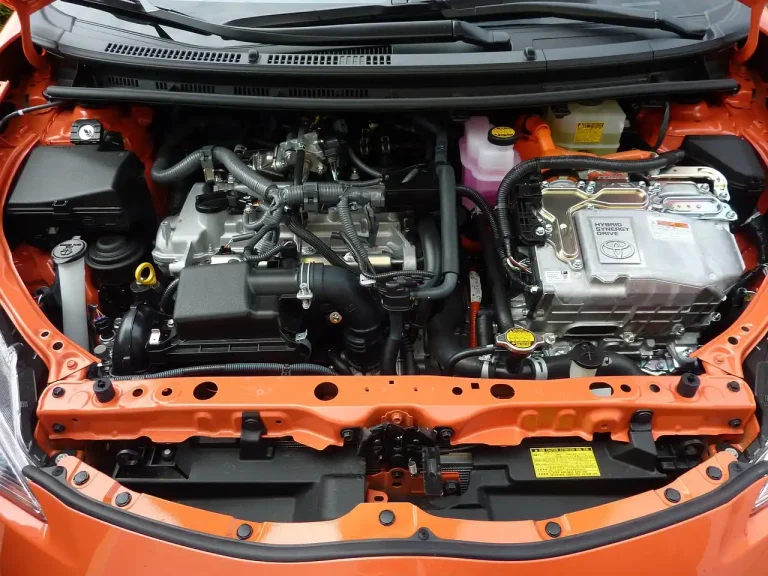
The main hybrid parts are commonly the internal combustion engine, the electric motor, the traction battery, and regenerative braking. The engine is the gas-powered source of propulsion. The motor helps with acceleration, can move the car at low speed in some hybrids, and can work as a generator during braking. The battery stores recovered energy and feeds the motor.
Think about the system as energy flow. Gasoline creates mechanical power in the engine. Electricity in the battery feeds the motor. Software decides which source should do the work at that moment.
How hybrid power moves at each moment
At startup, many hybrids use electric assist or a brief electric-only launch if the system is set up to allow it. At low speed, the engine may stay off more often, especially in city driving. Under hard acceleration or on a steep grade, the engine usually joins in because the car needs more power than the battery alone can provide. On the highway, the engine does most of the steady work, while the motor trims fuel use when conditions allow.
When you slow down, the motor can reverse energy flow and become a generator. That is the core of regenerative braking. The moving car’s energy gets captured instead of being lost as heat.
Hybrid energy flow cheat sheet
| Driving scenario | Which component is active | What happens to the battery | What the driver feels |
|---|---|---|---|
| Start | Motor may move the car first; engine may stay off briefly | Battery gives up energy | Quiet pullaway, often smooth and calm |
| City crawl | Motor assists at low speed; engine may cycle on and off | Battery may discharge, then recover a little between stops | Less engine noise in stop-and-go traffic |
| Hard acceleration | Engine and motor may work together | Battery discharges faster | Stronger shove, with the engine sound rising |
| Braking | Motor acts as generator | Battery recharges | Deceleration can feel slightly different from a gas car |
| Highway cruise | Engine does most of the work; motor may assist lightly | Battery use is modest | Steady, normal cruise with fewer battery events |
Say your commute is 7 miles through stoplights and school traffic. A hybrid may spend more time shutting the engine off, restarting it, and recapturing energy during braking. That is where the fuel economy gain often shows up most clearly.
How regenerative braking works
Regenerative braking captures kinetic energy while the car slows down. Instead of wasting that motion as heat in the brake pads, the electric motor switches roles and acts like a generator. The recovered energy goes back into the battery for later use.
This is why hybrids can feel different during gentle braking. The pedal may feel more blended than in a gas car because the system mixes regeneration with the normal friction brakes. Brake wear can also be lower because the friction brakes do less work in everyday slowing.
What happens when you slow down
- You lift off the accelerator or press the brake pedal.
- The control system asks the motor to resist wheel motion.
- That resistance creates electricity.
- The electricity flows into the traction battery.
- If stronger stopping is needed, the friction brakes add the rest.
A common first-timer mistake is assuming every stop feels the same in a hybrid. The first part of the slowdown can feel lighter or more elastic because the system harvests energy before the regular brakes fully take over.
Hybrid types compared
Hybrid layouts differ in how the engine and motor send power to the wheels. Some use both together through a transmission. Some let the engine run a generator and leave wheel drive to the motor. Others blend both paths through a planetary gearset.
Parallel hybrid
A parallel hybrid can use the gas engine, the electric motor, or both at once. This is a common architecture, and it often uses a conventional transmission or CVT. The wheels can be driven directly by the engine, by the motor, or by both.
Series hybrid
A series hybrid uses a dedicated generator driven by the engine. The wheels are driven electrically, so the engine does not usually connect to the wheels in a direct mechanical way. This layout is more common in certain range-extended designs.
Power-split hybrid
A power-split hybrid blends engine and motor output through a planetary gearset. That lets the system divide power between direct drive and electrical generation. Toyota-style systems are the common example buyers hear about most often.
Mild hybrid vs full hybrid vs PHEV
| Type | Can it move on electricity alone? | Does it need plugging in? | Practical clue for shoppers |
|---|---|---|---|
| Mild hybrid | Usually no | No | Smaller battery and motor; efficiency boost is modest |
| Full hybrid | Yes, at least in some driving moments | No | Can creep or launch electrically at low speed |
| PHEV | Yes | Yes | Larger battery and electric-only range before the engine starts |
If a car can move only with battery power for short stretches, that is a full hybrid or a plug-in hybrid, not usually a mild hybrid. If it cannot drive on electricity alone, it is generally a mild hybrid.
Do hybrid cars need to be plugged in?
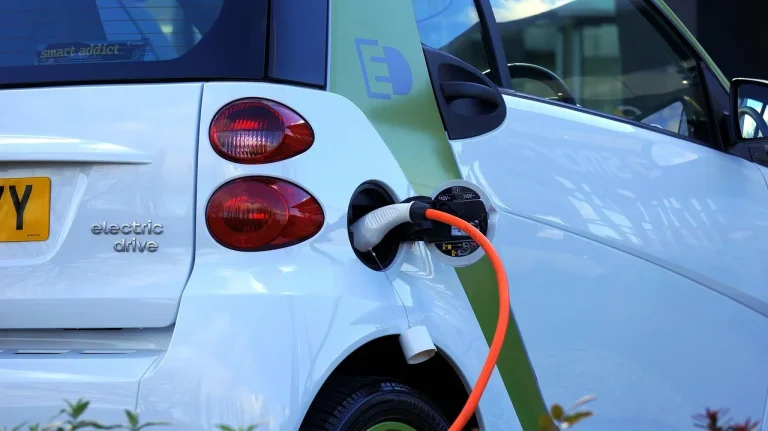
Regular hybrids do not need external charging. They recharge through regenerative braking and, in some cases, through the engine. A plug-in hybrid is different, because it can be charged from an external power source and has a larger battery than a conventional hybrid.
The phrase “self-charging” can mislead shoppers. A conventional hybrid does recharge itself during driving, but that does not mean it has plug-in charging. A PHEV adds external charging and a much larger electric-only buffer.
What a plug-in hybrid adds
MotorTrend says plug-in hybrids can drive 20 to 50 miles on electricity alone. That extra range matters if your daily trip is short enough to stay inside the battery’s electric window. If you plug in at home or work, many errands can happen without using gas at all. motortrend.com reports that kind of electric-only capability as a major benefit of plug-in hybrids.
Suppose the daily school run is 14 miles total and the battery can be topped up in the garage overnight. A PHEV may cover that on electricity alone. If your commute is 60 miles, the engine will likely join in, and the advantage depends more on how often you can recharge.
How to tell if a car can drive on electricity alone
- Check whether it has a plug-in port.
- Look for an electric-only driving range figure.
- See whether the battery size is described as larger than a normal hybrid battery.
- Read whether the car can creep or launch under battery power at low speed.
- If the answer is “usually not,” it is likely a mild hybrid.
What a hybrid means for daily driving
In city traffic, a full hybrid usually shows its biggest advantage because it can use battery power at low speed and recover energy during frequent slowing. Reputable automotive coverage from Car and Driver explains that many non-plug-in hybrids use relatively small batteries, but the exact size varies by model and by system design. In stop-and-go driving, that setup helps the car reuse energy often, which is where the efficiency gain is most noticeable. On the highway, the engine tends to take over more often because steady high-speed cruising favors gasoline power.
That does not mean the battery sits idle. It still helps trim fuel use and smooth short power demands. The driver usually notices fewer idle moments, less stop-start drama, and quieter pulls away from lights.
Hybrid car vs regular car: what’s the difference?
A regular gas car relies on the engine for propulsion and wastes braking energy as heat. A hybrid adds a motor, a battery, and control software so the car can recover some of that energy and shift work between power sources. The result is usually better city fuel economy and more engine shutoff at stops.
The tradeoff is more complexity under the hood. For most buyers, the bigger question is not whether a hybrid is “better” in the abstract. It is whether your driving has enough stop-and-go time to let the system do its job.
Frequently asked questions
How does hybrid work on a car?
A hybrid car works by switching between or blending a gasoline engine and an electric motor. The battery stores energy for the motor, and regenerative braking adds some energy back during slowing. At low speed, the motor may do more; at higher load, the engine usually takes over more of the work.
What makes a hybrid car a hybrid?
What makes a hybrid a hybrid is the combination of an engine, an electric motor, and a battery controlled as one system. Hybrid cars use two power sources: a gasoline engine and an electric motor. The software decides how to share the load for starting, cruising, braking, and acceleration.
Can a hybrid car run without the battery?
No hybrid is meant to run normally without its battery in place. The battery supports the electric motor and system control. If the battery is weak or disconnected, the car may not start, or it may enter a limited mode where performance and efficiency drop sharply.
What are the different types of hybrid cars?
The main types are parallel hybrid, series hybrid, power-split hybrid, mild hybrid, and plug-in hybrid. Parallel hybrids can use the engine, motor, or both. Series hybrids use the engine mainly as a generator. Power-split systems mix both paths, while mild hybrids usually cannot drive on electricity alone.
How does regenerative braking work in a hybrid?
When you slow down, the motor can reverse energy flow and act as a generator. That captures kinetic energy and sends it to the battery for later use. It helps improve efficiency and can reduce brake wear because the friction brakes do less of the stopping work.