How to Wash a Hybrid Engine Bay Safely
Use low pressure and avoid direct spray on orange high-voltage cables, inverter cover, fuse box, alternator, exposed connectors, or intake openings; clean with a damp microfiber, soft brush, and APC diluted at about 1:10 to 1:20. Bad cleaning can trigger warning lights, corrosion, misfires, and costly electrical faults. This guide gives you a hybrid-specific no-spray map and a stop/go checklist for safe DIY engine-bay cleaning.
What makes a hybrid engine bay different
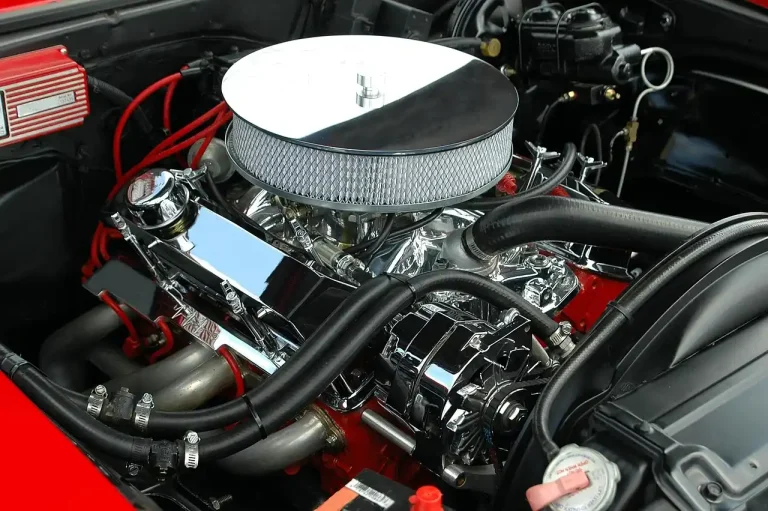
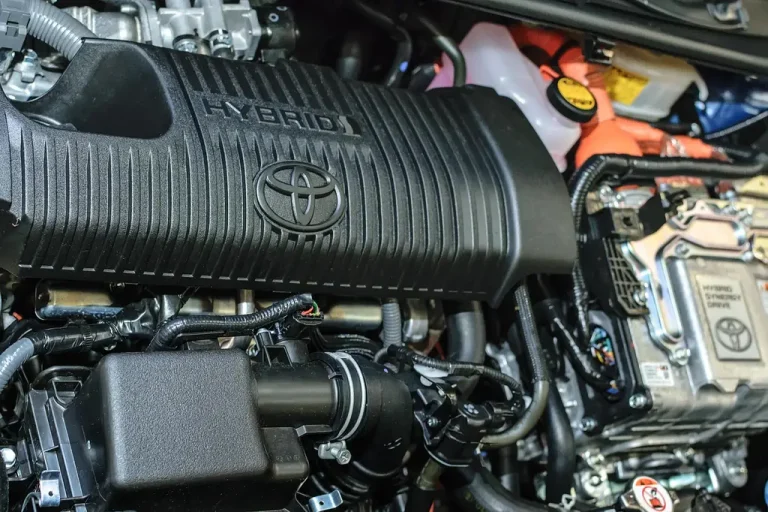
A hybrid engine bay combines standard 12-volt hardware with high-voltage parts that need a no-spray approach. The battery pack, inverter, orange high-voltage cables, sealed connectors, and nearby shock-risk zones should not get direct spray. Modern engines can handle rain, road spray, and humidity, but that is not the same as aiming water into electrical junctions or soaking connectors.
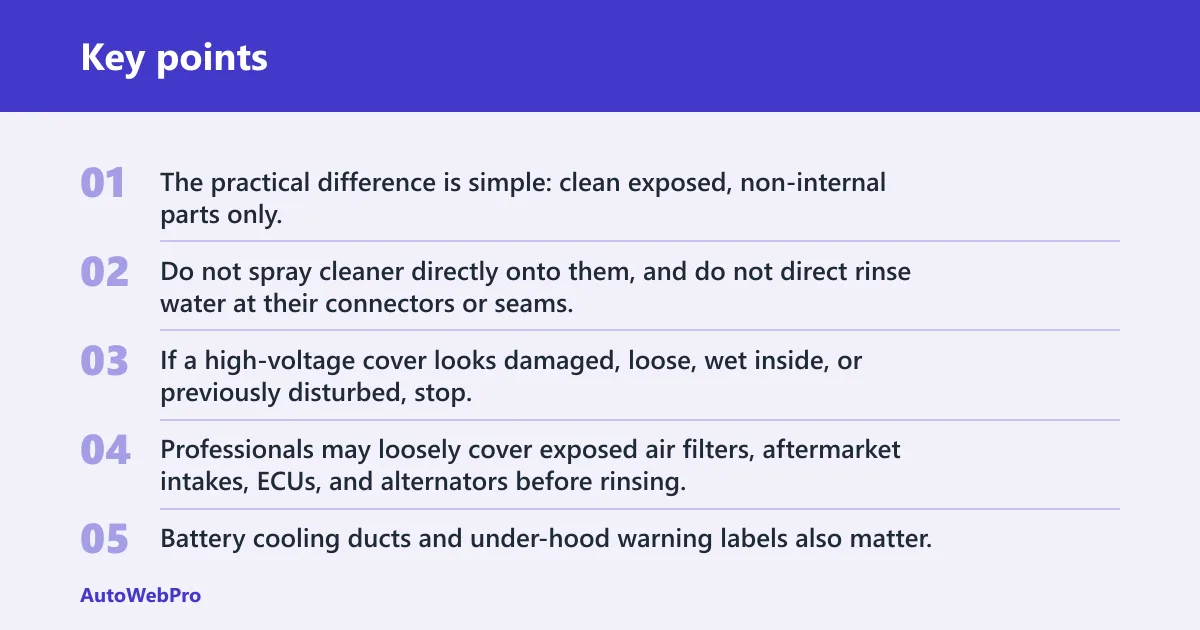
The practical difference is simple: clean exposed, non-internal parts only. Dirt, grease, oil residue, and debris can come out from under the hood, but the cleaning plan has to separate safe bodywork from electrical zones and air openings.
High-voltage parts to treat as no-spray zones
Orange high-voltage cables, the inverter housing, the battery pack area, and sealed junctions belong in the no-spray category. Do not spray cleaner directly onto them, and do not direct rinse water at their connectors or seams.
If a high-voltage cover looks damaged, loose, wet inside, or previously disturbed, stop. That is not a detailing question anymore.
Accessory electrical parts that still need protection
Hybrid-specific caution also applies to the alternator, fuse box, ECU connectors, exposed sensors, aftermarket wiring, and coil packs. Professionals may loosely cover exposed air filters, aftermarket intakes, ECUs, and alternators before rinsing. That loose cover is there to cut splash and overspray, not to trap cleaner under plastic wrap.
Battery cooling ducts and under-hood warning labels also matter. If a duct feeds air to the battery system, keep it dry and free of loosened debris.
Why hybrid layouts need a more cautious cleaning plan
A hybrid engine bay has more places where trapped moisture can hide and cause delayed faults later. Problems may appear 24–72 hours after washing because trapped moisture causes corrosion. That is why the safest approach uses controlled water, short cleaner dwell time, and forced-air drying after rinsing.
Can you use water to wash a hybrid engine bay?
Yes, but only with controlled, low-pressure water and careful masking of vulnerable parts. Low-pressure water or spray bottles are recommended instead of aggressive rinsing. Pressure washers increase the risk of alternator damage and connector corrosion, so they are the wrong tool for this job.
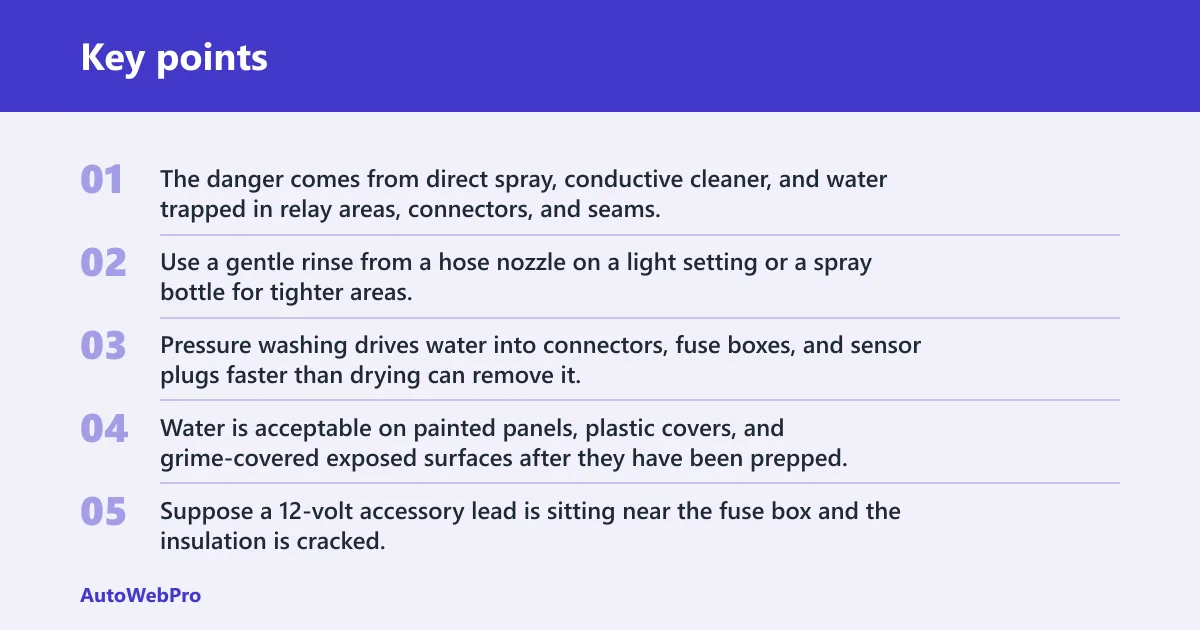
Water is acceptable on exposed, non-electrical surfaces when the engine is completely cool and the spray stays away from no-spray zones. The danger comes from direct spray, conductive cleaner, and water trapped in relay areas, connectors, and seams.
Low-pressure rinse versus pressure washing
Use a gentle rinse from a hose nozzle on a light setting or a spray bottle for tighter areas. Keep the stream diffuse, not concentrated. Pressure washing drives water into connectors, fuse boxes, and sensor plugs faster than drying can remove it.
Where water is acceptable and where it is not
Water is acceptable on painted panels, plastic covers, and grime-covered exposed surfaces after they have been prepped. It is not acceptable on orange high-voltage cables, inverter cover seams, open electrical connectors, intake openings, or any obvious wiring damage.
Suppose a 12-volt accessory lead is sitting near the fuse box and the insulation is cracked. That area should not be washed at home. Stop and fix the wiring problem first.
When to stop before any rinsing starts
Stop before rinsing if the engine is still hot, if there is exposed wiring damage, or if you see loose connectors, warning lights, or signs of prior electrical faults. A hybrid engine bay can be cleaned safely only when the risk map is clear.
A common first-timer mistake is treating a hybrid like a sealed plastic shroud. It is not. The safe path starts with a visual check, not with a spray nozzle.
What to cover before you clean
Cover the components that are most likely to suffer from splash, runoff, or trapped moisture. That includes the alternator, fuse box, ECU area, exposed connectors, and any aftermarket wiring or accessories. Keep covers loose so moisture can escape after the rinse.
Do not seal hot parts under airtight plastic for long periods. That can trap heat and moisture in the wrong place.
-
Map the risk zones.
Identify orange high-voltage cables, inverter housing, battery pack areas, fuse box, alternator, ECU connectors, exposed sensors, aftermarket wiring, and intake openings. Mark anything that should not receive direct spray. -
Let the engine cool completely.
The guide says the engine must be allowed to cool completely before cleaning. Hot surfaces flash-dry cleaner and can leave residue on plastics, sensors, and painted parts. -
Loosely cover sensitive parts.
Use clean plastic or foil only as a loose shield over exposed air filters, aftermarket intakes, ECUs, alternators, and the fuse box. The goal is to deflect splash, not seal the bay shut. -
Remove loose debris first.
Brush or blow away leaves, grit, and dry soil from seams and corners before any liquid enters the bay. That keeps runoff from turning debris into a slurry that can collect in connectors.
Alternator, fuse box, ECU, and exposed connectors
The alternator should be protected from direct water exposure, especially if any higher-pressure rinsing is used. The fuse box should be covered loosely before rinsing to reduce the risk of water intrusion and electrical faults. ECU and sensor connectors should not be soaked, and any area that gets wet needs thorough drying.
Orange high-voltage cables, inverter area, and sealed junctions
Keep these as no-spray zones. Do not spray cleaner directly onto orange high-voltage cables, inverter housing, sealed connectors, ECU connectors, fuse boxes, or obvious electrical junctions.
For these areas, use a barely damp microfiber towel around nearby surfaces only. If grime sits on top of a cover, clean the cover without aiming liquid into seams.
Battery cooling ducts and aftermarket accessories
Battery cooling ducts should stay dry and open. Aftermarket lights, audio wiring, battery monitors, and remote-start accessories need special caution because added wiring often runs through less protected routes. If the accessory installation looks unfinished, exposed, or taped together, the bay is not a DIY candidate.
How to clean a hybrid engine bay safely
Use automotive-safe degreaser on dirty surfaces, give it a short dwell time, agitate lightly, and rinse with controlled low pressure. A proper cleaning focuses on exposed, non-internal components only. The cleaner should dwell for about 2–5 minutes and should not dry on the surface.
-
Apply cleaner sparingly.
Spray automotive-safe engine bay degreaser onto the surface you intend to clean, not into open connectors or electrical junctions. A 1:10 to 1:20 APC dilution is a common practical starting point for light to moderate grime. -
Work one small section.
Clean one area at a time so the product does not sit long enough to dry. If the surface starts to haze or dry early, re-wet the area lightly rather than letting residue bake on. -
Agitate with soft brushes.
Use soft brushes on dirty surfaces only. That lifts grease and road film without forcing liquid into seams, sensor plugs, or the edges of electrical covers. -
Rinse with controlled flow.
Use low-pressure water and keep the stream indirect. Aim at panels and housings, not connectors, orange cables, or the fuse box. Stop if water starts pooling near electrical parts.
Modern vehicles can tolerate moisture, but mistakes with direct spray, conductive cleaner, or trapped water cause the damage. Say a hybrid has a film of oil mist around the valve cover and a dusty fuse box cover nearby. Clean the oily panel first, cover the fuse box loosely, and rinse only the painted and plastic surfaces.
What the checklist should cover
This checklist is the stop/go filter for a hybrid engine bay. Use it before any water touches the car, and again after the rinse. If any red-flag item appears, stop immediately and do not continue the wash.
| Component | Risk level | Allowed cleaning method | What to cover | Red-flag symptoms that mean stop immediately |
|---|---|---|---|---|
| Battery pack area | High | Wipe only nearby surfaces; no direct spray | Anything open or unsealed around the area | Loose trim, exposed damage, warning label missing, visible moisture inside |
| Inverter housing | High | Wipe around the housing only | Seams and adjacent connectors | Cracked cover, wet seam, hissing, warning lights already on |
| Orange high-voltage cables | High | No direct spray; dry wipe nearby areas only | Exposed cable routing | Damaged insulation, exposed conductor, loose retainers |
| Alternator | Medium to high | Light wipe or very gentle rinse from a distance | Front face and vents if nearby spray is possible | Water pooling, noise after start, visible wetness in vents |
| Fuse box | High | Cover loosely before rinsing; wipe exterior only | Top cover and nearby openings | Cover not seated, damp inside, corroded terminals |
| ECU and sensors | High | Low-pressure rinse only on surrounding surfaces; dry thoroughly | Connector faces and wire clips | Loose plug, fault light, rough running after start |
| Aftermarket wiring | High | Dry clean around it only | Any taped splice or exposed run | Frayed insulation, non-factory connectors, blinking accessory lights |
| Battery cooling ducts | Medium to high | Brush debris away; avoid soaking | Inlet openings and duct seams | Blocked passage, damp debris, unusual odor after cleaning |
How do you dry the engine bay after rinsing?
Dry the bay with forced air as soon as rinsing ends. Compressed air or a leaf blower can be used to remove trapped moisture from crevices, connectors, relay areas, and seams. Thorough drying matters because delayed faults can appear 24–72 hours later when trapped moisture causes corrosion.
-
Blow out hidden water.
Use compressed air or a leaf blower to push water out of seams, under covers, and around connector bases. Work from top to bottom so runoff does not collect in cleaned areas. -
Target electrical edges.
Dry around fuse box edges, sensor plugs, relay areas, and wire clips. Keep the nozzle moving so you do not force debris deeper into a gap. -
Wipe remaining film.
Follow with a clean microfiber towel on accessible surfaces. This removes leftover cleaner residue and helps spot any area that stayed wet. -
Wait before restart.
Leave the hood open until the bay is fully dry to the touch in visible areas. That pause reduces the chance of a damp connector causing a later fault code or rough start.
Picture a hybrid that looks dry from above but still has moisture under the fuse box lip. The engine may start normally, then throw a warning light the next day. That is why drying is part of the wash, not an optional extra.
Should you disconnect the battery first?
A battery disconnect is optional extra caution rather than a universal requirement. It can reduce the chance of accidental activation in some cases, but it is not a substitute for covering parts, using low-pressure water, or keeping liquid away from no-spray zones. If the car has existing wiring issues, do not treat a disconnect as a fix.
Choose the disconnect only when the vehicle layout is clear and the owner manual supports it. If battery access is awkward, if stored settings matter, or if the bay already has obvious electrical problems, leave the system alone and avoid the wash.
When a battery disconnect is reasonable
It is reasonable as extra caution when the bay is otherwise healthy, the battery is easy to reach, and the goal is a light cleanup rather than a deep degrease. Even then, keep the wash method conservative.
When wiring issues mean do not proceed
Do not proceed if there is exposed wiring damage, loose connectors, burnt insulation, corrosion on terminals, warning lights already present, or signs of prior electrical faults. Engine bay cleaning is not recommended for engines with exposed wiring damage.
The disconnect does not make damaged wiring safe to wash. It only reduces risk from accidental current flow while you clean a healthy bay.
Frequently asked questions
How do you clean a hybrid engine bay without damaging electrical components?
Use a cool engine, cover sensitive parts loosely, apply an automotive-safe degreaser, agitate dirty surfaces with a soft brush, then rinse with low pressure only. Keep direct spray away from orange high-voltage cables, inverter housing, fuse box, alternator, and exposed connectors, then dry everything with forced air.
What parts of a hybrid engine bay should be covered before washing?
Cover the alternator, fuse box, ECU area, exposed sensors, aftermarket wiring, and any open intake or cooling duct. Professionals may also loosely cover exposed air filters and aftermarket intakes. The cover should block splash while still allowing moisture to escape after rinsing.
Should you disconnect the battery before detailing a hybrid engine bay?
Not always. It is an optional extra precaution, not a rule for every hybrid. If there are exposed wiring problems, loose connectors, or warning lights already on, do not rely on a battery disconnect to make the wash safe.
Can you pressure wash a hybrid engine bay?
No. Pressure washers increase the risk of alternator damage and connector corrosion, and they drive water where it should not go. A low-pressure rinse is the safer choice, and a spray bottle is even better for tight spots.
How do you dry a hybrid engine bay after washing?
Use compressed air or a leaf blower to remove trapped moisture from seams, connectors, relay areas, and crevices. Then wipe remaining film with microfiber and leave the hood open until visible moisture is gone. That reduces the chance of delayed electrical faults.
When should you avoid washing a hybrid engine bay?
Avoid it when the engine is hot, when wiring damage is visible, when connectors are loose, when warning lights are already present, or when the bay shows signs of corrosion or prior electrical trouble. Those are stop signs, not cleanup notes.
Will engine bay cleaning cause electrical problems in a hybrid?
Not when the bay is cleanly laid out, the cleaner is automotive-safe, water is controlled, and drying is thorough. Problems usually come from direct spray, conductive chemicals, or trapped moisture in connectors and relay areas. Mistakes cause the fault, not the presence of water alone.
Can a hybrid engine bay be cleaned if there are existing wiring issues?
No. Existing wiring damage, exposed conductors, or loose wire runs turn a routine wash into a risk event. Fix the wiring first, then clean the bay once the electrical system is back to a known-good state.