What Are the Pros and Cons of a Hybrid Car?
Hybrid cars often make the most sense if you drive mostly city or mixed routes, cover roughly 8,000 to 15,000 miles a year, and can wait long enough for fuel savings to offset the higher purchase price. Pick the wrong one and you can pay more up front without saving enough on fuel to matter. This guide breaks down the main pros, cons, and the driver profiles that fit hybrids best.
Hybrid car powertrain basics
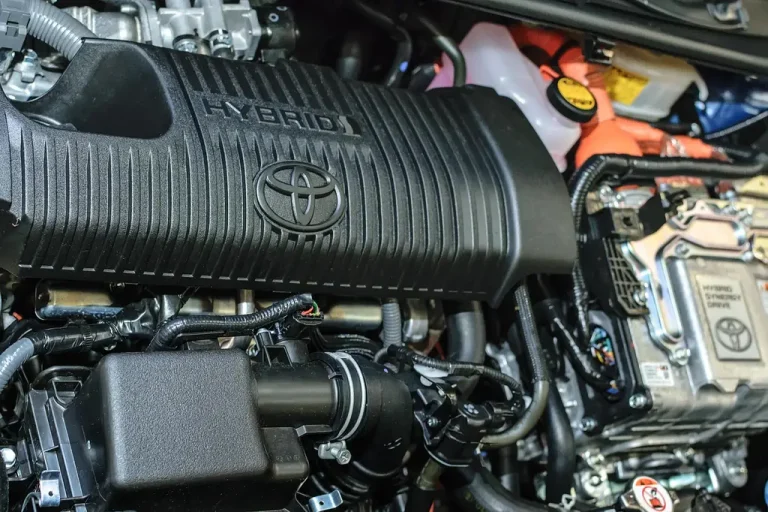
A hybrid car combines a petrol or diesel engine with an electric motor and a battery. The system can assist the engine, move the car at low speeds on electricity alone in some designs, and recover energy when you slow down. That mix is why hybrids can feel calm in traffic and use less fuel when the route suits them.
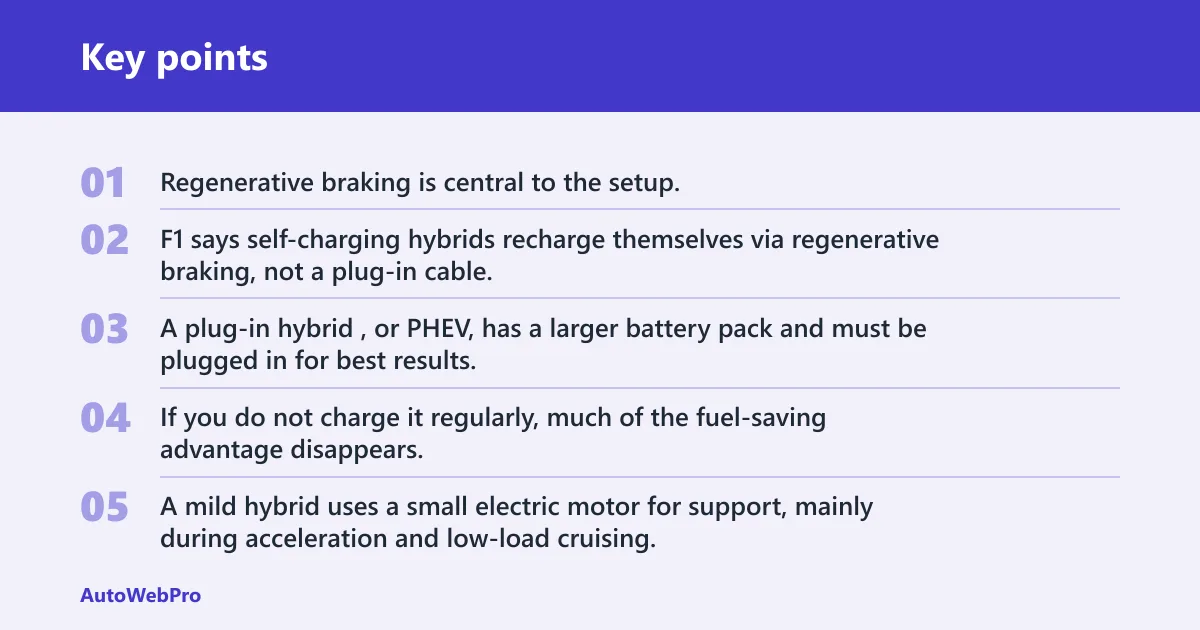
Regenerative braking is central to the setup. It captures kinetic energy during braking, recharges the battery, and reduces brake wear. The battery then feeds the motor again, which helps the engine less often in stop-start driving than it would in a regular car.
Self-charging hybrid
A self-charging hybrid does not need a plug. It recharges through regenerative braking and engine use, so it is the easiest hybrid type to live with if you do short city trips or mixed runs with no charging routine. F1 says self-charging hybrids recharge themselves via regenerative braking, not a plug-in cable.
Plug-in hybrid
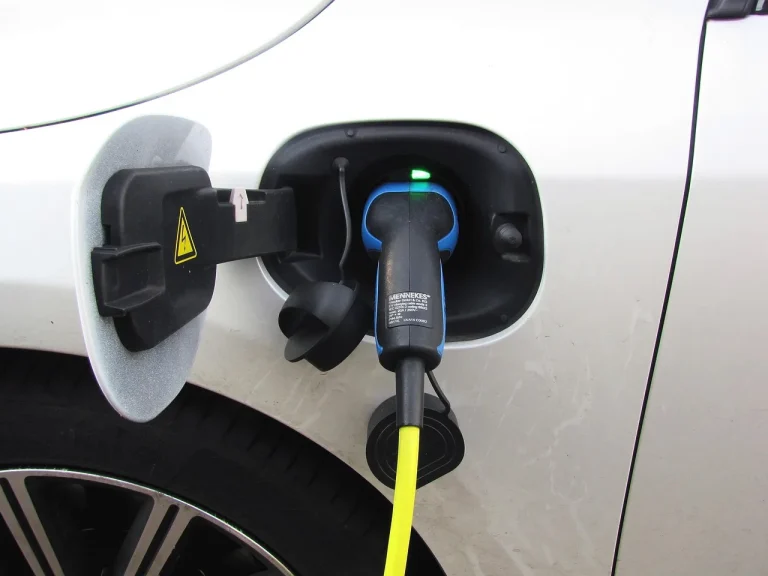
A plug-in hybrid, or PHEV, has a larger battery pack and must be plugged in for best results. It can drive on electric power alone for a limited range, and F2 says that can be up to 65 miles on electric power alone. If you do not charge it regularly, much of the fuel-saving advantage disappears.
Mild hybrid
A mild hybrid uses a small electric motor for support, mainly during acceleration and low-load cruising. It cannot drive on electric power alone. The gain is usually smaller than with a full hybrid or PHEV, but it can still trim fuel use and smooth the engine’s workload.
Why hybrids suit some drivers more than others
Hybrids are not a universal win. The savings are strongest when the car can recover energy often, use electric assist in low-speed traffic, and avoid long stretches of steady high-speed cruising. That is why route type matters more than the badge on the tailgate.
City traffic and stop-start driving
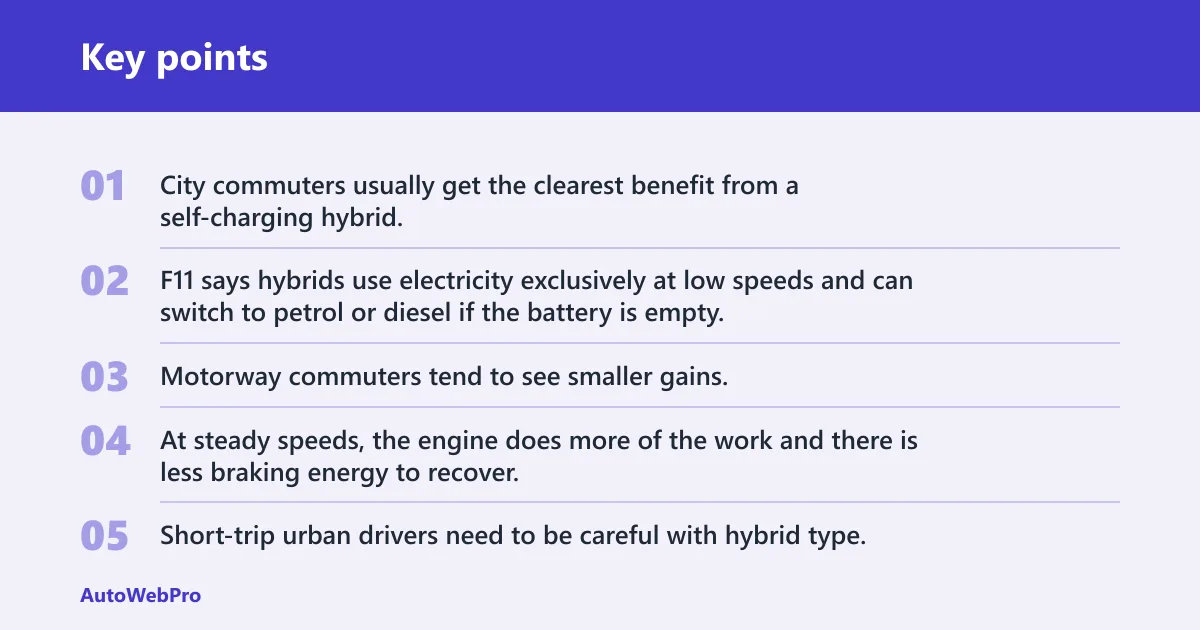
City commuters usually get the clearest benefit from a self-charging hybrid. Frequent braking feeds the battery, low-speed electric driving can cut engine use, and the drivetrain often feels smooth pulling away from lights. F11 says hybrids use electricity exclusively at low speeds and can switch to petrol or diesel if the battery is empty.
Motorway mileage and steady cruising
Motorway commuters tend to see smaller gains. At steady speeds, the engine does more of the work and there is less braking energy to recover. A hybrid can still return better mpg than a comparable petrol car, but the gap often narrows enough that the higher purchase price becomes harder to justify.
Short trips, cold starts, and charging access
Short-trip urban drivers need to be careful with hybrid type. A PHEV can work very well if you can charge at home or at work and your journeys stay within its electric range. Without regular charging, the car may carry extra weight for little reward. In cold weather, short trips can also reduce electric-only benefit because the engine may need to run more often for cabin heat and system protection.
Say your daily drive is 6 miles each way, with traffic lights and 20 minutes of crawling before a clear road. A self-charging hybrid is likely to suit that pattern better than a motorway-focused diesel or a PHEV you cannot plug in often. The stop-start part of the route gives the hybrid system repeated chances to recover energy.
What are the main pros of a hybrid car?
Hybrid cars can cut fuel use, reduce exhaust pipe emissions, and feel smoother at low speeds than a comparable petrol model. The biggest gains usually show up in urban use, but the value depends on the exact hybrid type and how you drive it. A self-charging hybrid and a PHEV do not deliver the same results in the same conditions.
Fuel economy and lower running costs
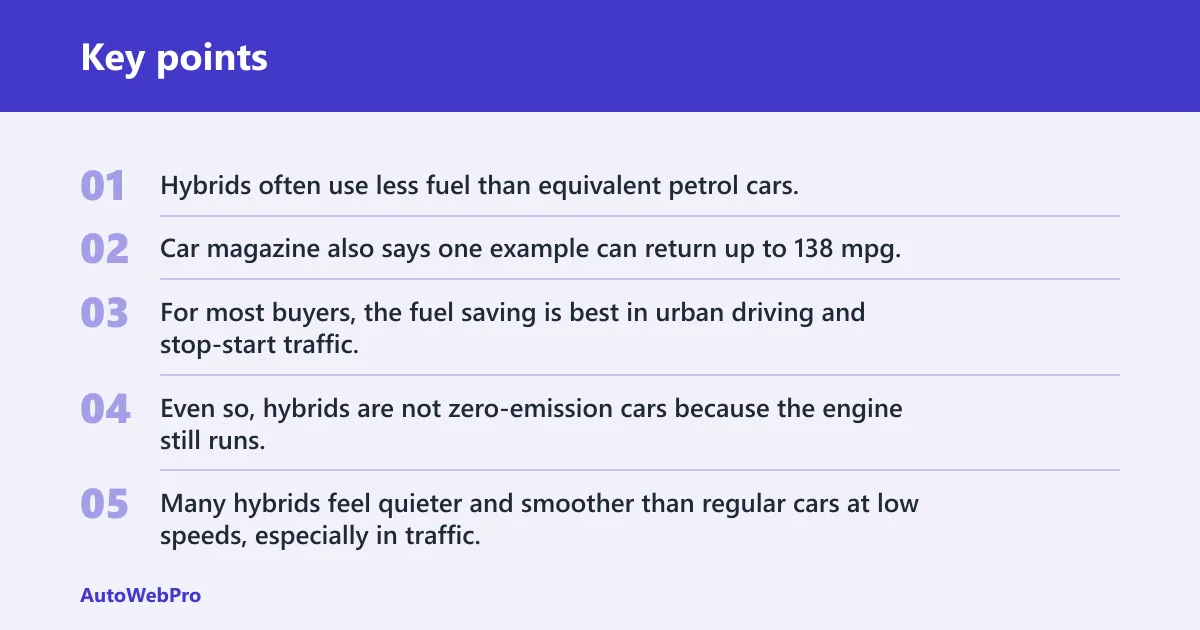
Hybrids often use less fuel than equivalent petrol cars. Renault says the Clio hybrid gets 67.3 mpg versus 54.3 mpg for the petrol version, and CarVertical says hybrid fuel consumption reduction is about 10% to 40%. Car magazine also says one example can return up to 138 mpg. Those numbers show the spread: route and usage pattern matter a lot.
For most buyers, the fuel saving is best in urban driving and stop-start traffic. On a long motorway commute, the saving can still exist, but it may be too small to make up for the extra upfront cost in a reasonable ownership period.
Lower CO2 and exhaust emissions
Hybrids burn fuel less often in the right conditions, so tailpipe emissions can fall compared with a conventional petrol car. CarVertical says average CO2 reduction is approximately 20% versus petrol vehicles, and Car magazine cites 39 g/km CO2 for the BMW 330e. Even so, hybrids are not zero-emission cars because the engine still runs.
Quiet low-speed driving and smooth pull-away
Many hybrids feel quieter and smoother than regular cars at low speeds, especially in traffic. Trendsledgers says hybrids are quieter and smoother than regular cars. That can make school runs, shopping trips, and congestion less tiring, with the motor filling in the first part of acceleration before the engine takes over.
Regenerative braking and reduced brake wear
Regenerative braking does more than refill the battery. It also reduces the load on the friction brakes, which can slow brake wear over time. The benefit is most noticeable in stop-start use, where a conventional car wastes more energy as heat every time it slows down.
What are the main cons of a hybrid car?
The drawbacks are real. Hybrids usually cost more to buy, some lose boot space to battery packaging, and long-term battery condition becomes part of the ownership risk. If your driving pattern does not suit the system, the savings can be too small to justify those tradeoffs.
Higher upfront purchase price
Most hybrid models cost more than equivalent petrol or diesel cars because of the battery, power electronics, and extra control hardware. CAR says the government grant for hybrid cars has been scrapped, so buyers should not count on subsidy help to close the gap. That makes the break-even calculation more important than ever.
A simple rule helps: if the fuel saving is modest and you keep the car for only a few years, the higher purchase price may never come back in savings. If you keep it longer and rack up the right kind of miles, the maths improves.
Battery wear and used-car risk
Hybrid batteries do not last forever. Capacity can degrade over time, and age matters as much as mileage on a used car. The same source says most hybrid battery packs last between 100,000 and 200,000 miles. That is useful as a planning range, not a guarantee.
A practical used-buying rule is simple: be more cautious with older hybrids that have high mileage and little battery warranty left. If service history is thin, the asking price should reflect the risk. For a used PHEV, ask how often it was charged, because a battery that sat mostly unused electrically may not have delivered the benefits the car was built for.
Boot space and packaging tradeoffs
Battery packaging can reduce boot space, and this is more common in PHEVs than in self-charging hybrids. Family buyers should check the cargo floor, load lip, and underfloor storage, not just the published litre figure. A large battery can also shape the rear seat and spare-wheel layout, which matters if you carry a pushchair, sports kit, or bulky luggage.
Picture a family that needs a wide, flat boot for weekly shopping and a folded buggy. A PHEV with a raised floor may still be the better powertrain on paper, but the usable space can be the deal-breaker if the load bay is too shallow.
Repair and maintenance questions
Hybrids are not automatically hard to maintain, but the systems are more complex than a standard petrol car. There is more to inspect, and some repairs involve high-voltage parts that need proper workshop equipment. Routine servicing is still normal, but it pays to buy from a maker with strong dealer and specialist support.
- Check the service history. Look for regular servicing, battery-related checks, and evidence of software updates. Missing records raise the risk on any used hybrid.
- Confirm warranty coverage. Compare battery warranty terms with the car’s age and mileage. A strong warranty reduces the fear of a costly out-of-pocket repair.
- Inspect charging habits. For a PHEV, ask how often it was charged and where. A car that rarely saw a charger may have delivered poor fuel economy and more engine wear than expected.
- Test the cargo layout. Open the boot, fold the seats, and check whether the floor height works for your load needs. Numbers on a spec sheet can hide awkward packaging.
Do hybrid cars need to be plugged in?
Some do, and some do not. Self-charging hybrids do not need a plug because they recharge through regenerative braking and engine use. PHEVs usually need plugging in to deliver their best fuel economy, while mild hybrids never need plugging in because they cannot drive on electricity alone.
The useful question is not whether a hybrid has a plug. It is whether your routine supports the type you choose. If you can charge at home every night, a PHEV can be a strong fit. If you cannot charge reliably, a self-charging hybrid is usually the safer pick.
Hybrid car decision matrix
This table scores hybrid suitability by driver profile, because the same car can be a strong buy for one person and a poor one for another. The “fuel-saving benefit” column is about likely real-world gain, not lab figures.
| Driver profile | Estimated fit level | Likely fuel-saving benefit | Main downside risk | Better match |
|---|---|---|---|---|
| City commuter | High | Strong, especially in stop-start traffic | Higher purchase price may still take time to recover | Self-charging hybrid |
| Mixed-use family | High | Moderate to strong on varied routes | Boot space and model packaging need checking | Self-charging hybrid |
| Motorway commuter | Low to moderate | Modest at steady speed | Fuel savings may not offset the extra cost | Self-charging hybrid only if you value refinement |
| Short-trip urban driver | High if charging is available | Very strong with regular charging; weak without it | PHEV becomes poor value if it is rarely plugged in | PHEV if you can charge often |
| High-mileage driver | Mixed | Can be good if miles are urban; weaker on long fast runs | Break-even depends heavily on route mix and ownership length | Depends on route; often self-charging hybrid for mixed use |
When do hybrid savings make financial sense?
Hybrid savings make the most sense when your mileage, route type, and ownership period let fuel savings catch up with the extra purchase price. For many buyers, that means mixed or city driving, enough annual miles to matter, and several years of ownership rather than a short stint.
If you do mostly motorway miles, the saving may be too small. If you do city miles but switch cars quickly, the payback window may also be too short. The middle ground is where hybrids usually work best.
- Estimate your mileage. Work out roughly how many miles you drive each year. A range around 8,000 to 15,000 miles is often where the numbers start to look more persuasive for many buyers.
- Match the route pattern. Decide how much of that mileage is city, mixed, or motorway. More stop-start driving helps a self-charging hybrid; regular charging makes a PHEV worthwhile.
- Check the price gap. Compare the hybrid premium with the petrol or diesel version you would otherwise buy. The larger the gap, the longer the payback period.
- Factor in ownership length. If you plan to keep the car for only a few years, fuel savings may not repay the premium. Longer ownership gives the hybrid more time to earn back its cost.
- Review battery risk. For used cars, weigh age, mileage, warranty coverage, and service history together. A cheap hybrid can become expensive if battery condition is uncertain.
Frequently asked questions
What are the pros and cons of a hybrid car?
The biggest pros are better fuel economy in the right driving pattern, lower CO2 than a comparable petrol car, quieter low-speed running, and regenerative braking that can reduce brake wear. The main cons are a higher purchase price, possible boot-space loss, and battery-related age and mileage risk on used cars.
Is a hybrid car better for city driving or highway driving?
Hybrid cars are usually better for city driving because stop-start traffic lets them recover energy and use the electric motor more often. Highway driving gives fewer braking opportunities, so the fuel-saving gap usually shrinks. That does not make them bad on motorways, just less compelling there.
Are hybrid cars more expensive to buy than regular cars?
Yes. Most hybrid versions cost more up front than equivalent petrol or diesel cars because of the battery and hybrid hardware. That premium is the first hurdle to clear, so buyers should compare it against likely fuel savings over the years they expect to keep the car.
Do hybrid cars save enough fuel to be worth it?
Sometimes, but not always. Savings are strongest in city and mixed driving, and weaker on long steady motorway runs. F3 shows a clear difference on the Clio hybrid versus petrol version, while F7 shows typical reductions can range from about 10% to 40%, depending on use.
Do hybrid cars have less boot space?
Some do, especially PHEVs where a larger battery can take space from the luggage area or raise the boot floor. It is model-specific, so check the usable shape of the boot rather than relying only on litres. That matters most if you need a flat, wide load bay.
Can a hybrid run without the battery?
Not in a normal sense. A hybrid’s battery is part of the system that helps launch the car, recover energy, and support the engine. The same source says hybrids can switch to petrol or diesel if the battery is empty, but that is not the same as being able to operate as intended with no battery support at all.