What Do You Need to Charge an EV at Home?
You need a 120-volt outlet for Level 1 charging or a 240-volt circuit for Level 2 charging, plus an EVSE that fits your car and outlet. Wire it wrong, and you can trip breakers, charge very slowly, or pay for do-over work. This guide shows what you already have, what to buy, and what electrical upgrades may be needed.
Home charging requirements checklist
At the simplest level, you need three things: a power source, the right charging equipment, and a vehicle-side connector that fits your EV. If you already have a usable outlet near your parking spot, you may be able to charge now. If not, you will need an electrician, and possibly a permit and a new circuit.
The key decision is whether your current setup supports Level 1 charging or whether you should plan for Level 2. That depends on the outlet you have, how far the car parks from it, and whether your electrical panel has room for another continuous load.
Home EV charging readiness checklist
| Item | Why it matters | Pass/fail |
|---|---|---|
| Outlet type | A 120-volt outlet can power Level 1 charging. A 240-volt outlet supports Level 2 charging. | Pass if you have the outlet type you plan to use; fail if you only have the wrong one. |
| Electrical panel capacity | An electrician uses a load calculation to see whether the home can support EV charging or needs a panel upgrade. | Pass if the panel has spare capacity; fail if the calculation shows an overload risk. |
| Dedicated circuit | Safe EV charging needs its own circuit. A 40-amp charger requires a dedicated 50-amp circuit under the 125% continuous-load rule. | Pass if the charger will be on its own properly sized circuit; fail if it shares a circuit. |
| Connector type | Your EVSE must match the vehicle inlet, or you need an adapter approved for that setup. | Pass if the connector matches your EV; fail if it does not. |
| Parking distance from power source | Cable length and outlet location determine whether the car can reach the charger without unsafe extension cords. | Pass if the cable reaches comfortably; fail if parking is too far away. |
| Permit need | Many areas require permits and inspections for new electrical work, especially new outlets or hardwired chargers. | Pass if local rules do not require one; fail if the job needs approval first. |
| Whether Level 1 is sufficient | Level 1 is slow and may be enough only for short daily driving and long overnight dwell time. | Pass if 3 to 5 miles of range per hour meets your needs; fail if you need faster recovery. |
If you have the basics, you can charge today
| If you have X, you can charge today | If you lack X, you need an electrician or outlet upgrade |
|---|---|
| A nearby 120-volt outlet and a compatible Level 1 cord | No usable outlet near the parking spot, or the outlet is too far away |
| A vehicle connector that matches the EVSE | Mismatched connector type or no approved adapter |
| Enough overnight time for slow charging | Daily driving that outpaces Level 1 recovery |
| Safe access to the outlet without extension cords | Need for new wiring, a new receptacle, or a hardwired charger |
Can you charge an EV at home with a standard outlet?
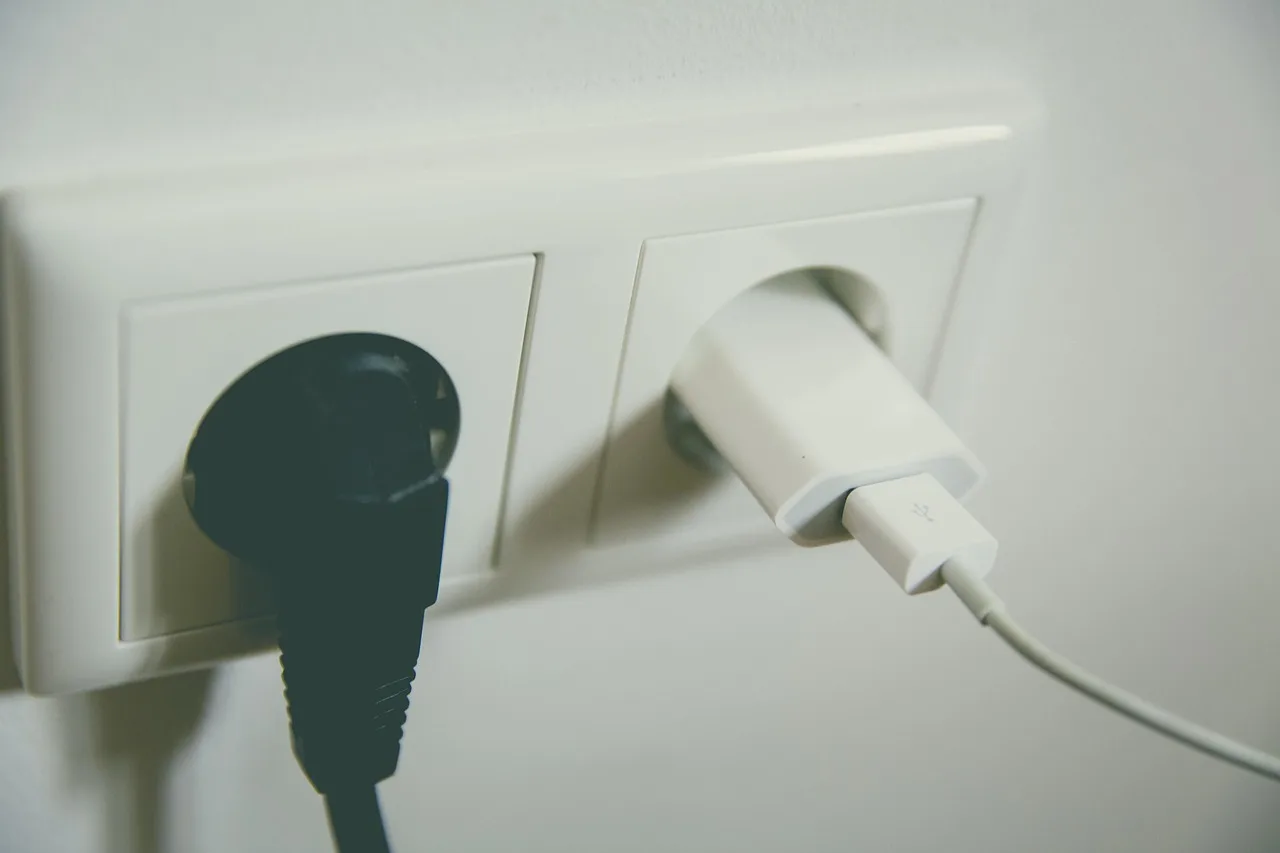
Yes, if you mean a standard 120-volt household outlet and your driving habits are modest. Level 1 charging is the slowest home charging method, but it works for many drivers who park overnight and do not drain the battery heavily each day. It adds around 3 to 5 miles of range per hour.
When Level 1 is enough
Level 1 can be enough if you drive short daily distances, have long parking time at home, and do not need to refill a large battery quickly. It uses an existing household outlet, so it may avoid new wiring. That said, it is a fit for some drivers, not all.
Suppose you drive about 18 miles a day and park for about 10 hours overnight. Level 1 may recover that use without extra electrical work. If your schedule or commute is heavier, the slow rate becomes the limiting factor, not the car.
When Level 1 will feel too slow
Level 1 becomes a poor fit when you need a large amount of range back every day, or when the car only has a short window to charge. That is common for commuters with long drives, apartment residents with limited parking time, and homes where the outlet is far from the parking space.
Check your daily mileage. Compare your daily driving with the 3 to 5 miles of range per hour that Level 1 adds. If your overnight window cannot cover the deficit, move to Level 2 planning.
Confirm the outlet location. Make sure the vehicle can reach the outlet without an extension cord. If the car parks outside or far from the wall, the setup may need new wiring.
Match the charging pace. If you need faster recovery, do not assume a standard outlet is enough. Level 2 may be the better path, especially for daily driving above light use.
Do you need a 240-volt outlet for home charging?
No, not for every EV owner. Level 2 uses 240 volts and typically adds around 25 to 40 miles of range per hour, which is far faster than a standard outlet.
Level 2 charging and the NEMA 14-50 option
Many homeowners choose a NEMA 14-50 outlet for plug-in Level 2 charging. It is a common choice for Level 2 EV chargers and may already exist in some garages, or it can be added. This route works well when you want flexibility and a charger that plugs in rather than being hardwired.
A Level 2 setup usually requires professional installation. That is because the circuit, outlet, and panel need to match the charger’s load and the home’s available capacity.
When hardwired installation makes more sense
Hardwired chargers are often the better choice for higher-output setups. Chargers rated at 48 amps or higher are usually hardwired for safety. Hardwiring can also make sense when you want a fixed installation and do not need the portability of a plug-in unit.
Decide on charging speed. Choose Level 2 if Level 1 will not recover enough range overnight. The 25 to 40 miles of range per hour from Level 2 is why many owners prefer it.
Check the garage or panel. Look for space for a new 240-volt circuit or outlet. If the home lacks it, an electrician will need to plan the upgrade.
Select plug-in or hardwired. Use a NEMA 14-50 outlet for many plug-in chargers, or choose hardwired equipment if the charger rating or local installation plan calls for it.
Which connector does your EV need?
Most EVs use the J1772 connector for Level 1 and Level 2 charging. Tesla vehicles use J3400/NACS, and some newer model-year vehicles may also use it. The charger and the car must match, or you need an adapter that is approved for both the vehicle and the charger.
J1772 for many non-Tesla EVs
J1772 is the common connector for Level 1 and Level 2 charging on many non-Tesla EVs. If you own a non-Tesla vehicle, this is often the default connector to check first. It is widely supported, so many home chargers ship with it.
J3400/NACS for Tesla and some newer models
J3400/NACS is associated with Tesla vehicles, and some newer model-year 2025 vehicles began using it. That does not mean every charger will fit every vehicle without an adapter. You still need to confirm the connector on both ends before buying.
When adapters are part of the answer
Adapters can solve a connector mismatch, but they are not a substitute for checking compatibility. A driver may need an adapter if the vehicle and charger use different standards, especially during the transition between J1772 and J3400/NACS equipment.
A common first-timer mistake is buying a charger before checking the inlet on the car. That can leave you with a perfectly good EVSE that does not fit the vehicle at all.
What electrical work may be required?
Electrical work is often the part people miss. An electrician may need to inspect the panel, calculate the load, add a dedicated circuit, install a new outlet, or hardwire the charger. Permits and inspections may also apply, depending on your city or state.
Electrical panel load calculation
A load calculation tells you whether the home can support EV charging without overloading the panel. If the panel is already close to capacity, the electrician may recommend a panel upgrade before adding a Level 2 charger. This step matters because EV charging can be a continuous load.
Dedicated circuit sizing and the 125% rule
A dedicated circuit is required for safe EV charging. Breaker sizing should follow the 125% continuous-load rule, which is why a 40-amp Level 2 charger requires a dedicated 50-amp electrical circuit. That pairing is a common example of proper sizing.
Permits, inspections, and electrician involvement
Many areas require permits and safety inspections for residential EV charger installations. The rule can vary by city and state, and it may differ for a new outlet, a plug-in charger, or a hardwired charger. An electrician often handles the permit process and the installation itself.
If the home is in a condo, apartment, or rental, the answer can change again. Access to the panel, the outlet, and parking distance from the power source may be controlled by the building, not just the unit owner or renter.
Confirm panel capacity first. Ask for a load calculation before buying hardware if the panel is older or already crowded. That avoids choosing a charger the home cannot support.
Size the circuit correctly. Match the breaker to the charger’s continuous load. For example, a 40-amp charger calls for a 50-amp circuit.
(EPA)
Check permit rules locally. Ask whether the job needs a permit or inspection before work starts. New outlets and hardwired chargers commonly trigger that step.
What type of charger is best for home charging?
The best charger is the one that matches your driving, your electrical system, and your parking setup. Level 1 works when your daily miles are low and time is abundant. Level 2 is the common home charging setup when you need faster recovery. A smart charger is optional, not required.
When a smart charger makes sense
A smart charger can connect to an app, schedule charging, and track energy use. It can also help you charge during off-peak hours if your utility pricing rewards that. These features are useful, but they are not necessary for basic home charging.
When simple equipment is enough
If you only need to plug in overnight and top off gradually, a basic charger may be enough. Focus first on connector fit, circuit sizing, and installation. Extra app features should come after the safety and compatibility questions are answered.
How do you charge an EV at home?
You charge an EV at home by plugging a compatible EVSE into a proper outlet or hardwired circuit, then connecting the vehicle. The exact path depends on whether you are using Level 1 or Level 2, which connector your car needs, and whether the home already has the right electrical setup.
Identify the outlet. Check whether you have a 120-volt outlet or a 240-volt outlet near the parking space.
Match the connector. Confirm whether your vehicle needs J1772, J3400/NACS, or an approved adapter.
Verify the circuit. Make sure the charger sits on a dedicated circuit sized for its continuous load.
Call an electrician if needed. Bring in a professional for panel checks, new wiring, outlet installation, hardwiring, and permits when local rules require them.
Frequently asked questions
What do you need to charge an EV at home?
You need a power source, a compatible EVSE, and the right connector for your car. If the home lacks the right outlet or circuit, an electrician may need to add one.
Can you charge an EV at home without a charger?
Not really. You need some form of EVSE, even for Level 1 charging, because the vehicle still needs a safe charging interface. A standard wall socket alone is only part of the setup, not the full solution. The EVSE and connector must still match the car.
Do you need a 240-volt outlet to charge an EV at home?
No, not always. A 120-volt outlet can work for Level 1 charging, but it is slow and best for lighter daily driving. A 240-volt outlet is the common choice when you want Level 2 charging and faster recovery, especially for longer commutes.
What connector do I need for home EV charging?
Most EVs use J1772 for Level 1 and Level 2 charging. Tesla vehicles use J3400/NACS, and some newer model-year 2025 vehicles began using it as well. If the car and charger do not match, you may need an approved adapter.
How fast does home EV charging work?
Level 1 charging adds around 3 to 5 miles of range per hour. Level 2 charging adds around 25 to 40 miles of range per hour. The right answer depends on how far you drive each day and how much time the car stays parked at home.
Do I need an electrician to install home EV charging?
For most Level 2 setups, yes. An electrician checks panel capacity, sizes the dedicated circuit, installs the outlet or hardwired unit, and handles permits in many cases. Even for simpler setups, professional help is wise if the outlet is not already close to the parking space.