Home Charging Explained for EV Owners
Home EV charging works best when the setup matches the car’s onboard charger, panel capacity, parking location, and daily miles; for many U.S. and Canadian drivers with off-street parking, a 240-volt Level 2 circuit is often the right home setup. Choose poorly and you may pay for hardware the car cannot use, charge too slowly for your routine, or trigger costly electrical work later. This guide covers Level 1 vs. Level 2, charging speeds, connectors, circuit sizing, installation limits, and how to choose based on mileage, parking, and service capacity.
Who can realistically charge at home?
Yes, most EV owners in North America can charge at home if they have legal access to the same parking space most days, such as a garage, driveway, or assigned off-street spot, and enough electrical capacity for the car and charging routine. The bigger limit is often parking access, not the vehicle. A garage, driveway, or assigned space matters as much as the charger itself.
Home charging works best when the car stays in one place for many hours and the cable can reach it every day without crossing a sidewalk, hallway, or shared traffic area. Detached houses with a driveway or garage are the simplest cases. Townhomes with private parking can also work well if the panel and parking location line up.
It gets harder for renters, condo owners, and apartment residents. If parking is unassigned, far from the unit, or controlled by landlord or HOA rules, home charging may depend on property approval or shared charging. In those cases, the practical setup may be workplace charging, a shared building charger, or public charging near home instead of a private wallbox.
Picture a driver with a reserved condo space directly below the unit but no permission to run new conduit. The EV may still be a good fit, but the charging plan shifts from “buy a charger” to “get board approval or use building and workplace charging.” Hardware alone does not fix an access problem.
How does EV charging at home work?
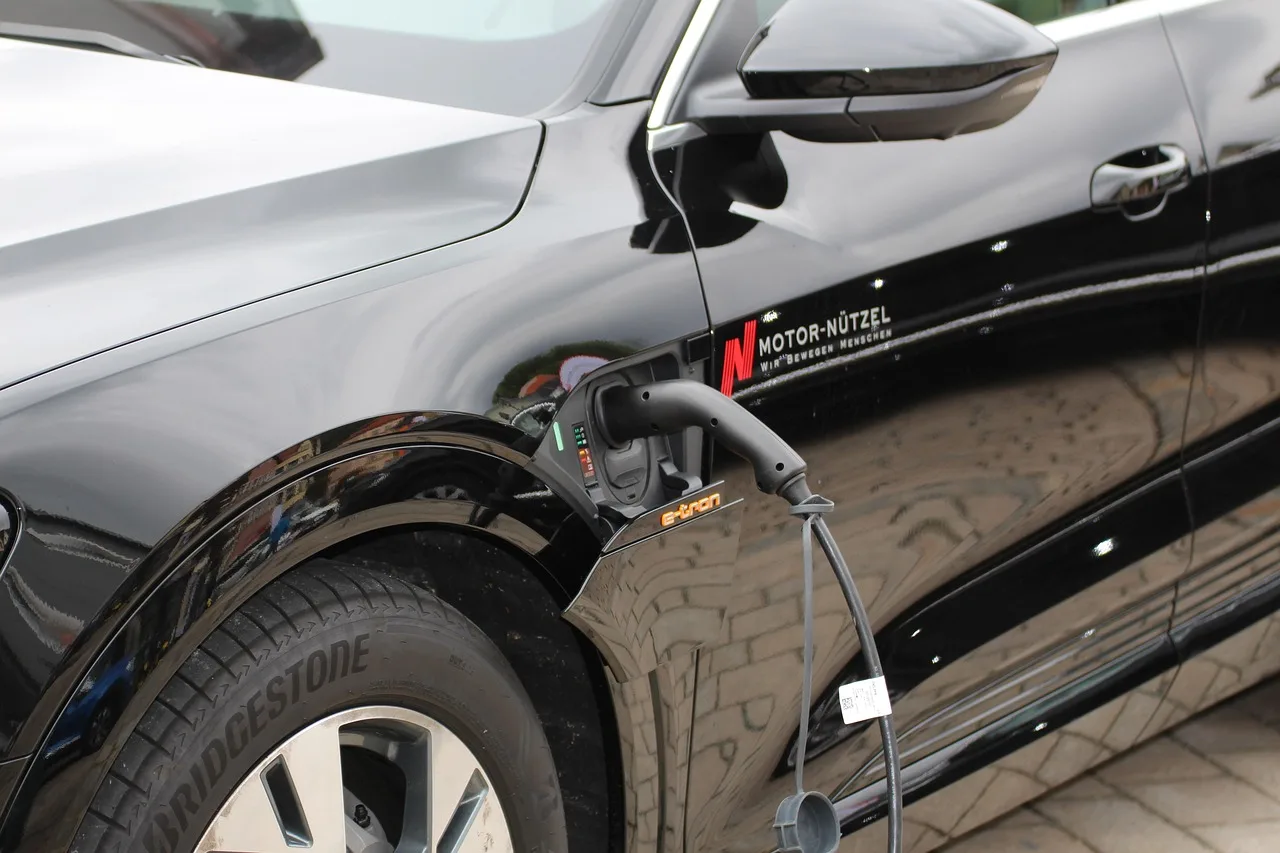
At home, the house supplies AC power and the car stores DC power in its battery. For Level 1 and Level 2 charging, the vehicle’s onboard charger converts AC to DC inside the car. That onboard charger can limit charging speed, which is why bigger home hardware does not always charge faster.
The wall unit or portable cord is more accurately an EVSE, the equipment that safely delivers power to the car. The onboard charger is inside the vehicle. Keep those terms separate, because the EVSE does not override the car’s AC charging limit.
Level 1 charging plugs into a standard 120V branch circuit, the same nominal household voltage used by common receptacles in U.S. and Canadian homes, and typically adds around 2 to 4 miles of range per hour. Many EVs include a portable cordset for this. It is simple, but for many drivers it is too slow to replace a full day of commuting unless the car stays parked for long stretches.
Level 2 charging operates at 240 volts, usually from a dedicated two-pole circuit like the kind used for an electric dryer, range, or purpose-installed EV charger. It is roughly six to eight times faster than Level 1 and can add around 12 to 32 miles of range per hour, depending on the vehicle and circuit. That is why Level 2 is the common home setup in North America. (Caranddriver)
DC fast charging is different. It bypasses the onboard charger and sends DC power to the battery at a much higher rate, often adding about 100 to 250 miles in 30 to 45 minutes. That is mainly a public-charging and road-trip solution, not the standard home setup.
Why the onboard charger matters first
Most buying mistakes start here. Owners shop by wallbox rating before checking the car’s AC charging limit in the manual or manufacturer documentation. If the car cannot accept more AC power, a larger unit may add cost, panel demand, and installation work with little or no gain.
Some EVs accept modest AC charging rates, while others can use more. The exact limit varies by model, trim, battery, and model year; confirm it in the owner’s manual. Level 2 hardware can reach much higher outputs, and the fastest possible Level 2 output can reach 80 amps, or 19.2 kW, but that only matters when the vehicle and electrical service both support it.
Which charging level fits your daily driving?
Your daily miles decide whether a 120V outlet is enough, whether a 240V Level 2 circuit is the better match, or whether home charging is not the main answer. Short daily driving with long parked time can work on Level 1. Moderate to high daily driving usually points to Level 2.
Level 1 on a 120V outlet
Level 1 uses a standard 120V household receptacle on a branch circuit that is in good condition and suitable for continuous EV charging. It usually adds around 2 to 4 miles of range per hour. That can work for a low-mileage driver with dependable overnight parking and a healthy outlet on a suitable circuit.
It is often included with a new EV as a portable cordset, which makes it a reasonable way to start while planning a permanent setup. It is also useful as a backup for travel or temporary charging at a relative’s house, subject to the vehicle and cordset instructions.
But Level 1 is easy to overestimate. If daily driving regularly outpaces what the outlet can replace during parked hours, the battery state will drift lower over the week. That is the common reason many owners move to Level 2.
Level 2 on a 240V circuit
Level 2 runs on a 240V circuit, usually a dedicated double-pole breaker feeding either a hardwired EVSE or a receptacle rated for the charger, and it is the normal home answer for drivers who want predictable overnight recovery. It is roughly six to eight times faster than Level 1, and typical home charging adds around 12 to 32 miles of range per hour.
A 7 kW-class wallbox is often a practical middle-ground choice for detached homes. In practice, that class of charger is often enough to refill a typical day’s use overnight without demanding the largest possible circuit. Actual delivered power still depends on the circuit, supply voltage, and the car’s onboard charger.
Say your commute is 45 miles round trip and the car sits from 8 p.m. to 7 a.m. Level 1 may struggle to refill that day after day, while a 7 kW-class Level 2 setup usually restores that use with plenty of margin. That decision turns on math, not brand hype.
Why DC fast charging is different
DC fast charging is for speed away from home, especially on trips.
For most homes, DC fast charging is not the benchmark to chase. The practical question is whether the car will be ready by morning using AC charging. If yes, bigger hardware may solve no real problem.
What plug type do you need?
The plug type depends on the vehicle and charging level. For home AC charging, many non-Tesla EVs use the J1772 connector, while Tesla vehicles use NACS. For public DC fast charging, many vehicles use CCS, and Tesla vehicles use NACS. No connector is universal across every car and charging scenario.
J1772 for most AC home charging
J1772 is the common round connector used by many non-Tesla EVs for Level 1 and Level 2 charging in North America. Home and public charging at AC speeds commonly use Type 1 or Type 2 connectors; in North America, the relevant home standard for many vehicles is the Type 1-style J1772 connection.
If the vehicle has a J1772 inlet, the home EVSE must have a matching connector or a manufacturer-approved adapter arrangement. Do not assume adapter support. Confirm it in the vehicle manual and charger documentation.
CCS for DC fast charging
CCS, or Combined Charging System, adds two large DC pins below the upper J1772 portion. That layout lets one vehicle inlet handle J1772-style AC charging and CCS DC fast charging. At home, CCS matters mostly as a reminder that public rapid charging and home AC charging use different power paths.
NACS and Tesla compatibility
NACS is the Tesla connector, and adoption is expanding among automakers. Some non-Tesla vehicles now ship with NACS ports, while others still use J1772 for AC and CCS for DC. That transition makes compatibility checks more important than ever.
A common first-timer mistake is buying a wallbox because the amperage sounds impressive, then finding out the connector does not fit the car without an adapter the vehicle maker does not support for that use. Match the connector first, then the circuit, then the EVSE features.
What electrical supply do you need at home?
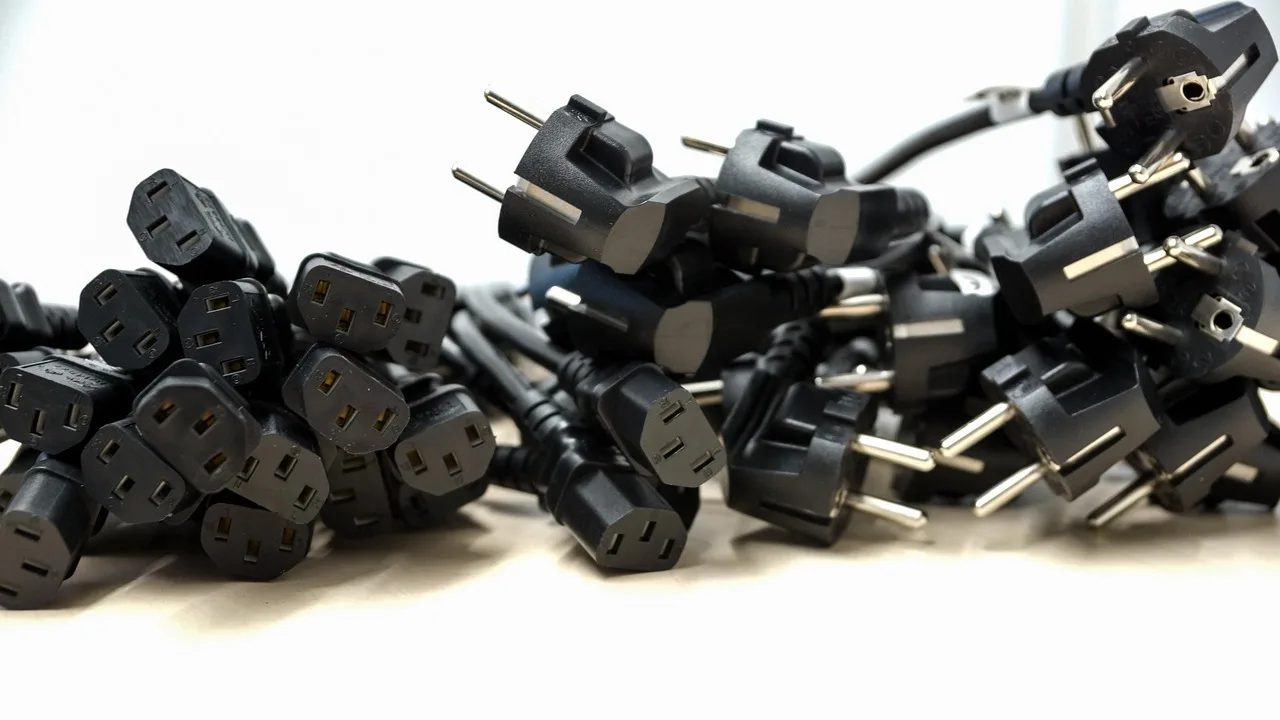
You need more than a free spot on the wall. A workable home charging setup starts with spare breaker space, enough service capacity, a dedicated circuit where required, healthy wiring and outlets, and a practical cable path to the parking spot. If those pieces do not line up, load management or a service upgrade may be the smarter move.
Panel capacity and spare breaker space
Start at the main panel. Look for open breaker positions, the service rating label, and any obvious crowding from existing large loads such as HVAC, electric water heating, dryers, or ranges. An electrician may need to perform a load calculation to determine whether a new EV circuit fits without overloading the service.
If the panel is physically full or already near its calculated limit, a standard 240V charger install can become more complicated. In that case, a load-managed EVSE may allow charging without a full service upgrade by reducing EV charging when the house is using more power elsewhere.
Dedicated circuits, outlet condition, and wire size
Level 1 only works well when the outlet and circuit are in good condition and not burdened by other heavy loads. Old, loose, discolored, or warm outlets are warning signs. Shared circuits can cause nuisance breaker trips or heat buildup.
Level 2 usually means a dedicated 240V circuit installed for the EVSE. The wire size, breaker, receptacle if used, and EVSE settings all have to match code and the equipment instructions. If the parking space is far from the panel, the run length and routing can affect labor, materials, and whether trenching or conduit is needed.
When load management makes sense
Load management is often the best answer when the house can support EV charging most of the time, but not always at full output. Instead of paying for a service upgrade, the system throttles charging to stay within the home’s electrical limits.
This works especially well for overnight home charging because the car usually has many hours to recover. If the vehicle’s onboard charger already caps AC speed at a modest level, load management can preserve flexibility without paying for oversized infrastructure.
When a service upgrade is the real answer
If the home lacks capacity for even a load-managed solution, or the panel is obsolete, damaged, or badly located, a professional panel or service upgrade may be the right long-term move. That is more likely in older homes adding multiple new electric loads at once.
Costs, permits, inspection rules, and utility coordination vary by region, panel condition, and parking layout. This is one place where unsupported price ranges do more harm than help, so confirm scope with a licensed electrician and the local authority having jurisdiction.
Charging setup decision table
| Daily miles | Parking type | Panel capacity situation | Vehicle onboard charger limit | Best-fit setup | Do not buy |
|---|---|---|---|---|---|
| 0-20 | Private garage or driveway, parked nightly | Healthy 120V outlet available; 240V circuit not practical yet | Any AC limit | Level 1 on a typical 120V outlet if the circuit and outlet are verified safe | High-output wallbox bought for speed alone when the car sits all night and daily use is low |
| 20-50 | Private garage or driveway | Spare breaker space or straightforward 240V run | Accepts at least about 7 kW AC; confirm in the manual | 7 kW-class Level 2 wallbox | Staying on Level 1 if parked time is limited and weekday use steadily exceeds replacement |
| 20-50 | Private parking, but panel near capacity | No easy room for a full new EV circuit at maximum output | Modest AC limit or varied schedule | Load-managed Level 2 charger sized to available service | Largest-possible EVSE without checking house load or the car’s AC charging cap |
| 50-80 | Private garage or driveway, parked overnight | A 240V circuit is feasible | At or above 7 kW AC; confirm in the manual | 7 kW-class Level 2 at minimum; consider more only if the car accepts more AC power and the panel supports it | Level 1 as the sole routine plan unless parked for unusually long periods every day |
| 50-80 | Private parking | Panel is full, service is marginal, or other major electric loads run overnight | High AC limit, but home service is the bottleneck | Load-managed Level 2 first; service upgrade only if calculations show it is necessary | Oversized charger installed on a circuit the house cannot support |
| 80+ | Private garage or driveway | Service may need review for sustained daily recovery | Varies by model | Professional assessment: higher-power Level 2 only if the car can use it and the service can carry it | Assuming DC fast charging at home is the normal answer |
| Any | Street parking, unassigned apartment parking, or HOA-restricted parking | Private circuit unavailable | Any AC limit | Focus on building approval, shared charging, workplace charging, or nearby public charging | Buying a private wallbox before parking rights and installation permission are secured |
| Any | Private parking | 240V available | Low AC charging cap; confirm in the manual | Charger sized close to the vehicle’s real AC limit | Paying for very high-output Level 2 hardware the car cannot use |
Do you need a 7 kW home charger?
A 7 kW-class home charger is often the best fit for North American detached-home owners because it balances overnight recovery, installation complexity, and panel demand. It is usually enough for common commuting patterns. But it is not automatic: some drivers do fine on Level 1, while some homes need load management instead.
Why a 7 kW-class wallbox is often enough
For many homes, this class of Level 2 charger is the practical middle ground. It is far faster than Level 1, avoids the slow creep of weekday charging deficits, and usually does not require chasing the highest possible AC output the car might accept.
That matters because home charging is a refill problem, not a race. If the car replaces the day’s use during its normal parked time, the system fits. More output may bring little real benefit.
When Level 1 still works
Level 1 can still make sense for very short daily driving, a healthy dedicated outlet, and lots of parked time. It is also useful as a temporary solution while permits, landlord approval, or an electrician visit are pending.
When higher-power hardware is wasted
If the car’s onboard charger tops out below the EVSE rating, the car sets the pace. Buying larger hardware in that case does not create extra AC charging speed. The only result may be a pricier install and tighter panel-capacity planning.
When load-managed charging beats a bigger circuit
Suppose a home has electric heat, an electric dryer, and a full panel, but the driver only needs to recover 35 miles each night. A load-managed Level 2 setup may solve the problem cleanly, while a larger fixed-output circuit could force a costly service upgrade without improving day-to-day convenience.
How do you choose and install a home charging setup?
Choose the setup in this order: verify parking access, check the vehicle’s onboard AC charging limit and connector, estimate daily miles and parked time, then review panel capacity and circuit options. Only after those checks should you pick Level 1, a 7 kW-class wallbox, load management, or a larger electrical project.
- Confirm parking rights. Verify that the vehicle can be parked in the same reachable spot most nights and that local rules, the landlord, condo board, or HOA allow charging equipment. If the space is shared or unassigned, solve that first because it can block the whole project.
- Check the vehicle limit. Look up the car’s onboard AC charging limit, connector type, and any approved adapter guidance in the owner’s manual or manufacturer documentation. This prevents paying for EVSE output the car cannot use.
- Estimate daily replacement. Write down a realistic weekday mileage number and compare it with the parked hours available at home. Use the known charging ranges: Level 1 typically adds around 2 to 4 miles of range per hour, while Level 2 commonly adds around 12 to 32 miles of range per hour.
- Inspect the electrical path. Check for spare breaker space, the service rating label, outlet condition if considering Level 1, and the distance from panel to parking. Shared circuits, old outlets, long runs, and outdoor exposure can change the right answer.
- Choose the simplest fit. If Level 1 clearly covers the routine, use it on a verified safe circuit. If daily use points to 240V recovery, a 7 kW-class Level 2 setup is the default choice. If service is tight, ask about load management before considering a full upgrade.
- Hire for permits and install. Use a licensed electrician where required and follow local permit and inspection rules. Match the circuit, breaker, wiring method, connector, and EVSE settings to the manufacturer instructions and applicable code.
- Test the routine. In the first week, watch for breaker trips, heat at the outlet or plug, awkward cable reach, and scheduling conflicts with other large loads. If anything smells hot, trips repeatedly, or behaves unpredictably, stop using that setup and call an electrician.
What can go wrong with home EV charging?
Most home charging problems come from mismatched circuits, weak outlets, shared loads, poor cable routing, or hardware chosen without checking the car and panel first. The warning signs are usually clear: breaker trips, hot plugs, charging interruptions, or a setup that works on paper but is annoying every single day.
Tripping breakers and shared-load conflicts
If a breaker trips when the EV starts charging, the circuit may be overloaded, shared with other loads, or incorrectly configured. Repeated resets are not a fix. The cause needs to be identified.
Level 1 is especially vulnerable when owners use a garage outlet that also supports refrigerators, freezers, tools, or heaters. One added load can turn a barely adequate circuit into a nuisance problem.
Heat, old outlets, and extension-cord risk
Warm plugs, discolored receptacles, buzzing, or a hot smell are reasons to stop. Older household outlets may not tolerate repeated high continuous load well enough for routine EV charging. Extension cords are a poor routine answer and should not be the plan for daily charging.
Weather, cable reach, and daily usability
An install can be electrically correct and still fail in practice. If the cable barely reaches, crosses a walkway, or requires backing into the spot with no margin, owners often stop using home charging consistently. Reach, parking orientation, and weather exposure should be decided before the electrician arrives.
When to stop and call an electrician
Stop and get professional help if the breaker trips repeatedly, the outlet or plug gets hot, charging speed is far below the expected circuit and vehicle limit, or the panel shows signs of overload. Also stop if the only way to make the setup work is an extension cord, a damaged receptacle, or improvised weather protection.
Frequently asked questions
How fast does home EV charging work?
Level 1 charging on a typical 120V outlet usually adds around 2 to 4 miles of range per hour. Level 2 charging at 240 volts is roughly six to eight times faster and typically adds around 12 to 32 miles of range per hour, depending on the car and circuit.
What plug type do I need for home charging?
Many non-Tesla EVs use J1772 for Level 1 and Level 2 home charging, while Tesla vehicles use NACS. CCS is mainly for DC fast charging and combines the J1772 upper section with two extra pins. Always confirm adapter support by vehicle model before buying EVSE hardware.
Do I need a 7kW home charger?
A 7 kW-class charger is often the right home fit for drivers with moderate daily mileage, overnight parking, and a workable 240V circuit. It is usually enough without chasing maximum hardware. If daily miles are low, Level 1 may be enough. If panel capacity is tight, load management may matter more.
Can you install a rapid charger at home?
Usually no, at least not in the public-station sense. DC fast charging is mainly a commercial and road-trip solution, and it bypasses the vehicle’s onboard charger. Most homes rely on AC charging, with Level 2 as the normal answer when Level 1 is too slow for the daily routine.
What electrical supply do I need for home EV charging?
You need a safe electrical path, not just a convenient wall location. Check spare breaker space, overall service capacity, dedicated-circuit needs, outlet condition, wire size, and the route to the parking space. If capacity is tight, a load-managed charger can make more sense than a larger circuit or immediate service upgrade.