Hybrid Basics: How Hybrid Cars Work
Hybrid cars pair a gasoline engine, one or more electric motor-generators, and a small battery to cut fuel use; most never need plugging in, while plug-in hybrids do. Get the system type wrong and you can buy the wrong tool, paying more for range, charging hardware, or complexity you will never use. This guide explains the four-step hybrid energy loop, shows how each hybrid layout moves power in normal driving, and clarifies HEV vs PHEV vs EV.
The easiest way to understand a hybrid is to track energy through four moments: start, low-speed launch, steady cruise, and braking. Once that loop is clear, the differences between parallel, series, power-split, and mild hybrids stop sounding theoretical and start making sense in daily driving.
What is a hybrid car, exactly?
A hybrid car combines a gasoline engine with one or more electric motor-generators and a rechargeable traction battery. The battery in a regular hybrid is usually small, charged inside the car rather than from a wall plug, and used as an energy buffer that helps launch, assist, and recover energy during braking.
The core parts
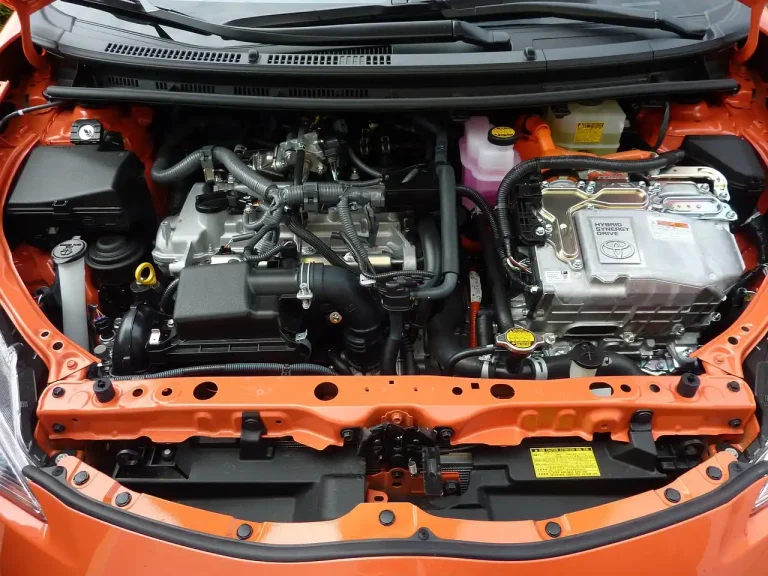
A hybrid combines two onboard energy paths: a gasoline engine that burns fuel and an electric drive side built around a motor-generator and traction battery. MotorTrend also describes the setup as an internal-combustion powertrain with an added electric motor and traction battery. Those pieces are linked by power electronics such as an inverter, which controls battery-to-motor energy flow, plus software that decides when each part works.
The internal combustion engine, or ICE, is still a gasoline-powered propulsion source. In many hybrids it can drive the wheels directly. In others, especially series designs, it mainly spins a generator to make electricity.
The electric motor does three jobs: it can help move the car, it can assist the engine under load, and it can reverse into generator mode during deceleration. That third job matters because hybrid electric motors can harvest energy while the car is slowing down.
Why a hybrid is different from a gas car, EV, and PHEV
A gas-only car turns gasoline into motion, then sheds most slowdown energy through the brake rotors and pads as heat. A regular hybrid still burns fuel, but it captures part of that deceleration energy and uses it again. An EV skips the engine entirely and relies on a much larger battery pack for all propulsion.
A plug-in hybrid electric vehicle sits in the middle. It can charge from an external source and then run as an EV for a while before switching to normal hybrid operation. MotorTrend says a PHEV can operate in electric-only range for between 20 and 60 miles, depending on the model.
The small-battery idea
The battery in a regular hybrid is much smaller than the pack in an EV. Hybrid batteries are usually no larger than 1 kWh, about 1 to 2 percent of a full EV battery. That small size changes what the system can do: quick bursts of assist, brief electric launches in some models, and frequent charge-discharge cycling rather than long electric driving. (Caranddriver)
That is why a normal hybrid makes more sense as an energy recycler than as an electric car with a backup engine. It keeps energy moving quickly. It does not store much of it for long.
📊 Some hybrids can delay engine restart until about 25 mph. Source: Caranddriver.
How does a hybrid car work step by step?
A hybrid works by moving energy through a loop: the battery wakes the system and may launch the car, the motor helps at low speed, the engine usually takes the lead in steady cruising, and braking sends some of the car’s motion back into the battery. The exact path depends on the hybrid layout.
Start: what wakes up first
At startup, the high-voltage battery powers electronics and prepares the motor-generator system. In many hybrids, the engine stays off if battery charge and temperature allow. The car can sit at a light with the engine stopped, then restart it only when more power, cabin heat, or battery charging is needed.
Some hybrids can delay engine restart until about 25 mph. That does not mean every hybrid will always stay electric to that speed, because charge level, accelerator input, and temperature can change the decision.
Low-speed launch: why electric torque helps
From a stop, the electric motor helps because it makes torque from zero rpm. That lets the car move without the engine flaring to high revs. In a full hybrid, the motor may launch the car alone for a short distance under light load, or it may simply assist the engine.
Picture a level downtown block, a green light, and a light throttle input. In a full hybrid with enough battery charge, the motor may handle the first few car lengths while the engine stays off. Press harder or point the car uphill, and the engine joins sooner.
Steady cruise: when the engine takes the lead
At moderate to higher road speeds, the gasoline engine usually becomes the main power source because steady-state cruising is where engines tend to work more efficiently than repeated stop-and-go acceleration. The motor may still assist briefly on grades or while passing, and it may also generate electricity if the system wants to refill the battery.
Parallel hybrids often feel most familiar here because the engine is mechanically linked to the wheels through a transmission. Power-split hybrids can blend engine and motor output through a planetary gearset and often mimic an electronically controlled CVT. Series hybrids still drive the wheels electrically, but the engine may run in the background as a generator.
Braking: how the system turns speed back into stored energy
When the driver lifts off or brakes, the motor-generator applies drag to the driveline and turns part of the car’s kinetic energy into electricity. That recovered energy goes back into the traction battery. This is regenerative braking, and it is one of the main reasons hybrids often do better in city driving than on long, steady highway runs.
Regenerative braking does not replace traditional brakes. Under harder stops, at very low speeds, or when the battery cannot accept much more charge, the computer blends in friction brakes to finish the stop safely and consistently.
The four-step loop in plain English
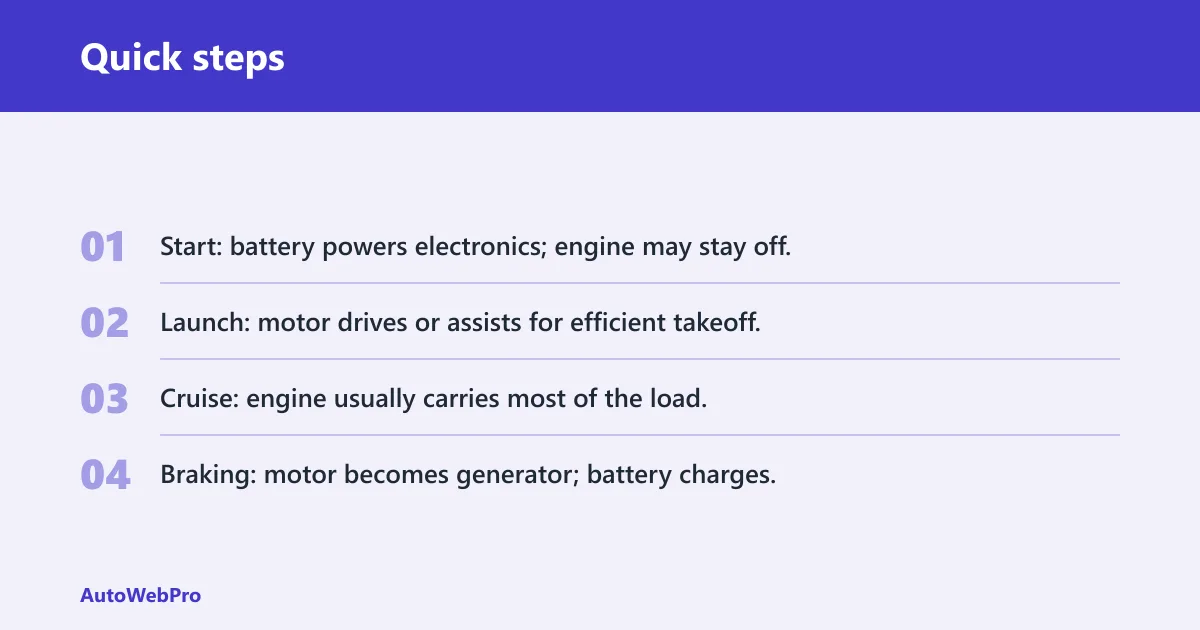
- Start: battery powers electronics; engine may stay off.
- Launch: motor drives or assists for efficient takeoff.
- Cruise: engine usually carries most of the load.
- Braking: motor becomes generator; battery charges.
How do the main hybrid parts share the work?
The engine, motor, battery, and brakes share work by taking turns as driver, helper, or charger. In one moment the engine drives the wheels, in the next the motor assists, and during braking that same motor acts as a generator while friction brakes step in when regenerative braking is not enough.
Internal combustion engine
The engine is the main long-duration energy source because gasoline stores far more usable energy than a small hybrid battery. In a parallel or power-split hybrid, it may drive the wheels directly. In a series hybrid, it mainly powers a generator instead of the wheels.
Its job also changes when the battery is low, cold, or unable to deliver full output. Then the engine runs more often, restarts earlier, and may carry loads the motor would normally share.
Electric motor
The motor is the quick-response part of the system. It helps from a stop, fills torque gaps during acceleration, and recovers energy when the car slows. In a full hybrid, it may power the wheels alone for short stretches. In a mild hybrid, it cannot.
This dual role matters. The same hardware that adds propulsion during launch becomes a generator during braking, which is why hybrids can keep reusing energy inside the car instead of wasting all of it as heat.
Traction battery
The traction battery stores recovered energy and feeds the motor when assist is needed. Because it is small, it cycles often and quickly. Charge can rise after one downhill or a few stoplights, then drop again during the next launch or merge.
A common first-timer mistake is expecting the battery gauge to behave like an EV range meter. In a regular hybrid, it is better read as a short-term energy buffer. A near-midpoint state of charge is normal because the system tries to keep reserve room for both assist and regen.
Brake blending and friction brakes
Brake blending is the computer-controlled handoff between regenerative braking and traditional friction braking. Light slowing may rely mostly on regen. As stopping demand rises, or as road speed drops near zero, hydraulic friction brakes do more of the work.
This is also why brake feel can vary a little from one hybrid design to another. The goal is steady deceleration even when battery charge, tire grip, or temperature changes how much regen is available.
Hybrid basics matrix
| Driving moment | Parallel hybrid | Series hybrid | Power-split hybrid | Mild hybrid |
|---|---|---|---|---|
| Start | Battery wakes systems; engine may stay off; motor is ready to launch through the transmission. Takeaway: Feels closest to a normal gas car, but the engine can remain stopped at idle. | Battery wakes the drive motor; engine stays off unless charge is low or heat is needed. Takeaway: Electric drive is primary from the first inch of movement. | Battery wakes motor-generators; planetary gearset stands ready; engine may remain off. Takeaway: Computer has several power paths available before the engine restarts. | Small battery supports stop-start; engine usually restarts quickly; motor cannot propel the car alone. Takeaway: Best seen as an engine helper, not an EV mode system. |
| Low-speed launch | Motor drives wheels alone in some full hybrids or assists the engine; engine and motor can both drive the wheels. Takeaway: This common layout mixes familiar drivetrain feel with electric help off the line. | Drive motor powers the wheels; engine, if running, turns a generator only. Takeaway: Wheels stay electrically driven even though gasoline may be making the electricity. | Motor can launch the vehicle alone under light load; engine joins through the planetary gearset as needed. Takeaway: Strong low-speed efficiency because the system can blend or separate power paths. | Motor adds torque to the engine during takeoff; battery discharges slightly; wheels are engine-driven. Takeaway: Smoother restarts and launch assist, but no true electric creep or EV-only start. |
| Steady cruise | Engine usually drives the wheels through an automatic, dual-clutch, or CVT-style transmission; motor assists on grades and may charge during light-load periods. Takeaway: Highway behavior is straightforward, with electric support mostly in the background. | Drive motor still turns the wheels; engine runs a generator when battery needs support. Takeaway: Feels most EV-like because wheel torque remains electric, even at speed. | Engine and motor power are blended by the planetary gearset; some systems use an electronically controlled CVT. Takeaway: Very flexible at mixed speeds, which is why this layout appears in high-volume models. | Engine carries almost all cruise load; motor may smooth shifts or add small assist; battery charging is modest. Takeaway: Fuel savings are real but usually smaller than in a full hybrid. |
| Braking | Motor switches to generator mode; battery charges; friction brakes add force in harder stops. Takeaway: Recovers energy well in traffic, where repeated slowdowns are common. | Drive motor becomes generator during deceleration; battery charges; friction brakes finish stronger or low-speed stops. Takeaway: Heavy reliance on electric drive usually means strong regen opportunity. | Motor-generators recover energy; battery charges; brake blending manages friction brakes. Takeaway: Highly managed energy recapture is a key efficiency advantage of the layout. | Smaller motor-generator recovers a limited amount of energy; friction brakes still do most of the work. Takeaway: Regen exists, but the smaller hardware limits how much energy comes back. |
What are the different types of hybrid systems?
Commonly cited hybrid layouts include parallel, series, power-split, and mild hybrid. They differ in one basic question: at any given moment, is the engine driving the wheels, is the motor driving the wheels, or is the engine only making electricity for a motor that does the driving?
Parallel hybrid
Parallel hybrids are described as the most common type. In this layout, the engine and motor can both drive the wheels. Depending on the design, the transmission may be a traditional automatic, a dual-clutch, or a CVT-style unit.
This layout often feels most like a conventional gas vehicle at highway speed because the engine has a direct mechanical path to the wheels. It still gains low-speed efficiency from electric assist and regenerative braking.
Series hybrid
Series hybrids use a primary drive motor and an engine-driven generator. The key point is simple: the wheels are driven electrically, while the engine’s main job is to create electricity.
That means engine speed does not have to match wheel speed the way it does in a conventional drivetrain. For a new owner, the useful takeaway is operational, not theoretical: the car can feel more EV-like in traffic because the motor is always the part actually turning the wheels.
Power-split hybrid
Power-split hybrids are often called series-parallel hybrids and use a planetary gearset to divide and combine power from the engine and motor-generators. It can act partly like a series hybrid at some moments and partly like a parallel hybrid at others.
MotorTrend identifies power-split hybrids as common in high-volume models like the Ford Maverick, Toyota RAV4, and Subaru Forester. Some systems use an electronically controlled CVT, which lets the computer vary engine and motor contribution without fixed stepped gear changes.
Mild hybrid
Mild hybrids use a smaller battery and motor that cannot power the vehicle on its own. Many use a 48-volt system, though exact voltage varies by manufacturer.
The motor’s job is narrower: restart the engine smoothly, add some launch torque, support accessories, and recover a limited amount of braking energy. If the question is whether the car can pull away from a stop using electric power alone, the answer for a mild hybrid is generally no.
Do hybrid cars need to be plugged in?
Most regular hybrids do not need to be plugged in because they recharge their small traction battery internally through regenerative braking and, when needed, engine-generated electricity. Plug-in hybrids are different: they can charge from an external source and then use that larger battery for a meaningful electric-only range first.
Regular hybrids
In a standard hybrid electric vehicle, the battery is charged on the move. Energy comes from braking recovery and from the engine’s ability to make electricity through a motor-generator. There is no external charging port on most of these vehicles.
That is why phrases like self-charging need care. The car is not creating energy from nowhere. It is reclaiming some slowing energy and converting some gasoline energy into electricity.
Plug-in hybrids
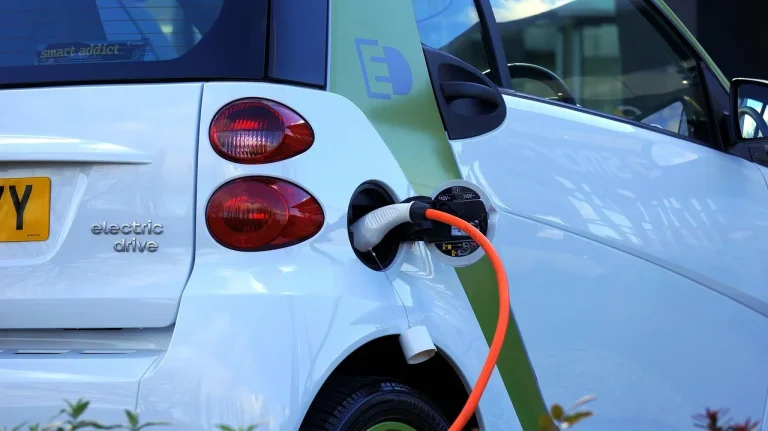
A PHEV carries a larger battery and is designed to be charged from the grid. That battery gives it EV-like ability for shorter trips, then normal hybrid behavior once the battery’s usable electric range is depleted.
Suppose your commute is 14 miles each way, you can charge at home, and weekend drives include longer highway runs. A PHEV may cover weekday miles mostly on electricity, then work like a hybrid on Saturday without requiring a DC fast-charging plan or full-EV road-trip habits.
Can a hybrid run on electric power alone?
Some hybrids can run on electric power alone for short distances at low speed and light load, but many cannot. Mild hybrids generally cannot propel themselves electrically, full hybrids sometimes can, and plug-in hybrids can do it much more often because they carry a larger battery.
Mild hybrid vs full hybrid vs PHEV
A mild hybrid assists the engine but does not replace it for propulsion. A full hybrid has a stronger motor and enough battery output to move the vehicle electrically in some conditions. A PHEV has enough battery capacity to make electric driving a main operating mode, at least until its charge is used.
That is where battery size shows up in daily life. With a battery usually no larger than 1 kWh, a regular hybrid has limited electric-only ability. The point is efficiency support, not electric commuting.
What limits EV-only operation
Even in a full hybrid, electric-only driving depends on charge level, road speed, accelerator demand, and battery temperature. Ask for strong acceleration, climb a grade, or turn on cabin heat in very cold weather, and the engine may start early.
Cold conditions matter twice. A battery may not deliver or accept power as freely, and the engine may need to run for emissions control or heat output. So the question is never simply whether a hybrid can go electric. It is whether the conditions allow it right now.
Why do hybrids save more fuel in city driving?
Hybrids usually save more fuel in city driving because stop-and-go traffic creates repeated chances to recover braking energy and repeated low-speed launches where electric assist is most useful. On a long steady highway trip, there is less braking energy to recover and less need for the motor’s low-speed advantage.
Stop-and-go helps the hybrid system
Each slowdown can put some energy back into the battery. Each restart from a stop can use some of that energy to reduce fuel use. A gas-only car gets neither benefit. It idles at lights and sheds braking energy through the friction brakes as heat.
Highway driving narrows the gap
At steady speed, the engine does more of the work because the motor’s instant low-speed torque matters less. That does not mean the hybrid advantage disappears. It means the advantage usually shrinks.
Say your drive is 42 miles of freeway at one speed with only one off-ramp stop. The hybrid can still cycle the engine and assist on grades, but there are fewer braking events to refill the battery, so the core energy loop is less active than it is on an urban route with ten lights.
What changes when the battery is cold, weak, or low?
When battery output or charge acceptance is restricted, a hybrid leans harder on the engine. You usually get less electric assist, less regenerative braking, more engine runtime, and lower fuel-efficiency benefit until temperature or charge returns to a normal range.
Cold and hot weather limits
Battery chemistry works best in a moderate temperature band. In cold weather, the pack may deliver less power and accept less regen during braking. In very hot weather, the control system may also limit battery stress to protect durability.
For the driver, the result is simple: the car still works, but the electric side does less. The engine may restart sooner after a stop, stay on longer, or run at moments when the vehicle would normally rely more on the motor.
Weak or aging battery behavior
If battery performance degrades, the system usually does not fail by instantly leaving the car stranded. More often, it falls back toward engine-heavy operation. Launches feel less electric, the battery gauge may swing more often, and city fuel economy usually drops first.
Regenerative braking can also be reduced if the battery cannot accept charge quickly. Then brake blending shifts more stopping work to the friction brakes. That does not mean the brakes are failing. It means the hybrid is recovering less energy and wasting more of that stopping energy as heat.
Which hybrid type fits your driving?
The best hybrid type depends on where and how you drive. City commuters usually benefit most from full hybrids or power-split designs, highway-heavy drivers often value the simpler feel of a parallel hybrid, mild hybrids suit shoppers who want modest efficiency gains with minimal behavior change, and PHEVs make sense only if charging is realistic.
City commuter
If most trips involve lights, low speeds, and repeated braking, a full hybrid makes the strongest case. Power-split and series-style behavior can also feel natural in urban traffic because the motor does more of the low-speed work and regen has frequent chances to recharge the battery.
Highway-heavy driver
If daily driving is mostly steady-speed highway cruising, the hybrid advantage is smaller. A parallel hybrid may feel more familiar because the engine directly drives the wheels for much of the trip. A PHEV can still make sense, but only if enough miles happen within its electric range and charging is easy.
Short-trip owner
Short errands and frequent cold starts favor hybrids over gas-only vehicles because idling and low-speed launch are exactly where electric help matters most. But a PHEV only pays off if those short trips are also charged regularly from the grid.
Hybrid, PHEV, or EV
Choose a regular hybrid if you want better city efficiency without changing fueling habits. Choose a PHEV if home or workplace charging is dependable and many trips fit inside its electric range. Choose an EV if charging access is solid and gasoline-free driving is the priority.
Frequently asked questions
How does a car hybrid work?
A car hybrid works by splitting jobs between a gasoline engine, an electric motor, and a small traction battery. The battery and motor help with launch and low-speed driving, the engine usually leads during cruising, and braking lets the motor recover some energy and store it back in the battery.
What are the different types of hybrid cars?
The main types are parallel, series, power-split, mild hybrid, and plug-in hybrid. Parallel systems let engine and motor drive the wheels, series systems use an engine-driven generator and electric wheel drive, power-split blends both paths, mild hybrids only assist, and PHEVs add external charging.
How does regenerative braking charge a hybrid battery?
During deceleration, the electric motor reverses into generator mode and resists wheel rotation. That converts some kinetic energy into electricity and sends it to the traction battery. The system then blends in friction brakes when stronger stopping force is needed or when the battery cannot accept much more charge.
What is the difference between a mild hybrid and a full hybrid?
A mild hybrid uses a smaller battery and motor that assist the engine but cannot usually move the vehicle on electricity alone. A full hybrid has a stronger electric side, so it can sometimes launch or creep under electric power and recover more energy during braking.
Can a hybrid car run on electric power alone?
Some can, some cannot. Mild hybrids generally cannot drive on electric power alone. Full hybrids sometimes can at low speed and light load if battery charge and temperature allow. Plug-in hybrids can do it far more often because their larger battery is meant for electric-only driving first.