Are Plug-in Hybrids Reliable?
Yes, plug-in hybrids are usually reliable when you charge them regularly and keep the hybrid system, 12-volt battery, and cooling parts serviced. Skip those habits, and you can end up with dead 12-volt batteries, stale fuel, shorter EV range, and costly fault repairs. This article explains which parts fail most often, which ownership patterns help, and how to judge a used PHEV before you buy.
How charging habits affect PHEV reliability
A plug-in hybrid can be very reliable, but usage matters more than the badge. A PHEV that gets charged often, driven long enough to warm the engine, and serviced on schedule can be dependable. A PHEV that sits, never charges, or skips maintenance is another case.
What reliability means in a PHEV
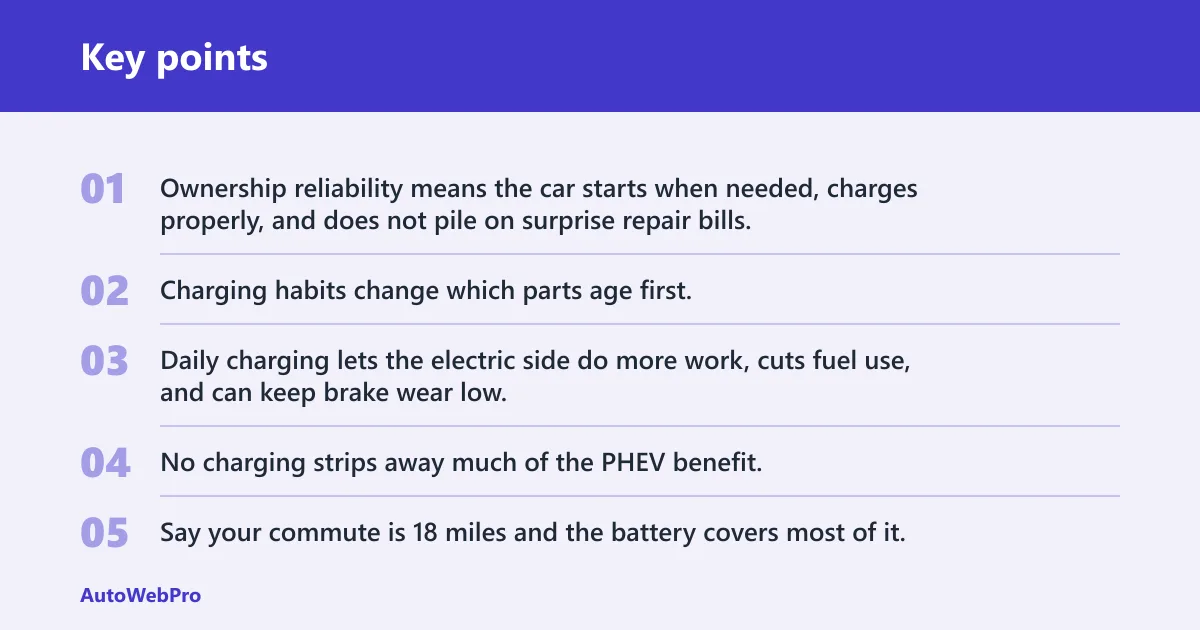
Reliability has two layers here. Powertrain reliability means the car keeps moving without repeat faults in the engine, motor, inverter, transmission, or battery system. Ownership reliability means the car starts when needed, charges properly, and does not pile on surprise repair bills.
Those are not the same thing. A PHEV can have a strong engine and motor, yet still frustrate owners because of a weak 12-volt battery, a fussy charge port, or software faults that trigger warning lights.
Why charging habits change the answer
Charging habits change which parts age first. Daily charging lets the electric side do more work, cuts fuel use, and can keep brake wear low. Rare charging leaves the battery underused, shifts more work to the gasoline engine, and can raise fuel aging and start-stop wear. No charging strips away much of the PHEV benefit.
Say your commute is 18 miles and the battery covers most of it. That can be easy on the engine. If the same car is never plugged in, the battery weight stays, but the charging benefit disappears, so the vehicle acts more like a heavier hybrid with extra hardware to maintain.
PHEV reliability checklist and failure modes
This checklist separates parts by ownership pattern. The same car can look dependable in one use case and troublesome in another. That is why used-PHEV shopping should focus on charging history, service records, and battery-health clues, not just fuel economy numbers.
| Component | What tends to fail | Early warning signs | Likely repair urgency | Buyer test steps |
|---|---|---|---|---|
| Traction battery pack | Capacity loss, cell imbalance, cooling-related wear | Reduced EV range, slower charging, battery warning light | High if warnings appear; moderate if range has simply faded | Check usable range, charge history, battery report if available, and warranty status |
| Electric motor | Drive-unit noise, bearing wear, inverter-related faults | Whine, shudder at launch, reduced regen | High if fault codes appear | Test low-speed takeoff, regenerative braking, and hybrid warning lights |
| Internal combustion engine | Oil breakdown, fuel aging, seal wear from infrequent use | Rough cold starts, misfire, fuel smell | Moderate to high depending on codes | Review oil-change dates, fuel-service history, and engine run time pattern |
| Power-split or series-parallel system | Clutch, transmission integration, control-module faults | Harsh shifts, hesitation, warning lamps | High if driveability changes are obvious | Check for smooth blending between EV and engine modes on a road test |
| Onboard charger | AC charging failure, heat-related shutdowns, port damage | No charge start, interrupted charging, melted or loose connector fit | High if it will not accept charge | Plug in at home or public AC, confirm rate, inspect port pins and latch |
| High-voltage cooling system | Pump, valve, hose, or fan issues | Reduced EV power, hot-weather derate, cooling faults | High in warm climates | Look for temperature-related warnings and cooling-system service records |
| 12-volt battery | Slow charging, sulfation, dead-start events | No start, blank screens, random warning messages | High if symptoms repeat | Test accessory power-up, sleep mode recovery, and age of the battery |
| Regenerative braking system | Brake blending faults, sensor issues, pad glazing | Poor brake feel, reduced regen, uneven stopping | Moderate unless warning lights appear | Check brake feel in stop-and-go driving and inspect pad wear |
How the battery affects reliability
The traction battery sits at the center of PHEV ownership. Most manufacturers list battery capacities in usable kilowatt-hours, and many PHEVs land around 8 to 25 kWh usable, depending on model and year. Warranty terms are often 8 years or 100,000 miles, though some markets and models are longer.
Degradation is normal. A battery pack may lose usable capacity over time, especially with repeated heat, frequent DC fast charging where supported, or long periods at very high or very low states of charge. Most owners notice that as shorter electric range, not as a sudden failure.
Replacement costs and what to check on a used car
Battery replacement is not the first outcome for most cars, but it is expensive enough to matter. A full pack replacement can range from several thousand dollars to well into five figures, depending on model, pack size, and labor. That is why battery health evidence matters on a used PHEV.
Confirm usable range. Ask for the current electric range on a full charge and compare it with the EPA figure for that model year. A meaningful drop can point to age, heat exposure, or a battery fault.
Check warranty status. Verify the battery warranty length, powertrain warranty length, and any emissions coverage that may apply. Some PHEVs have emissions-related parts coverage beyond the basic bumper-to-bumper term.
Look for cooling service. Ask whether the battery and inverter cooling system has had documented maintenance or repairs. Heat management matters more than many shoppers expect, especially in warm climates.
Why the engine still matters
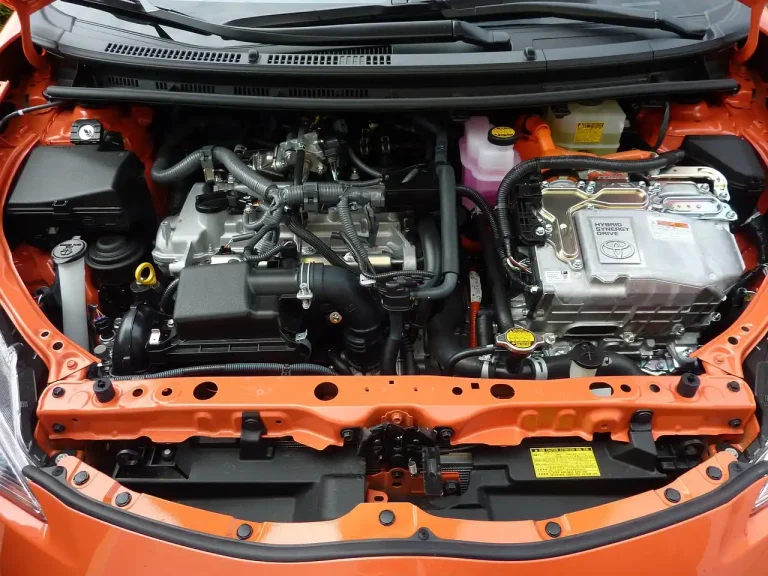
The gasoline engine still matters because it does real work, even in a plug-in hybrid. It starts and stops more often than in many conventional cars, and that repeated cycling can make oil condition and fuel quality more important. Regular oil changes still matter, even if the car is often driven electrically.
Start-stop wear and oil-change timing
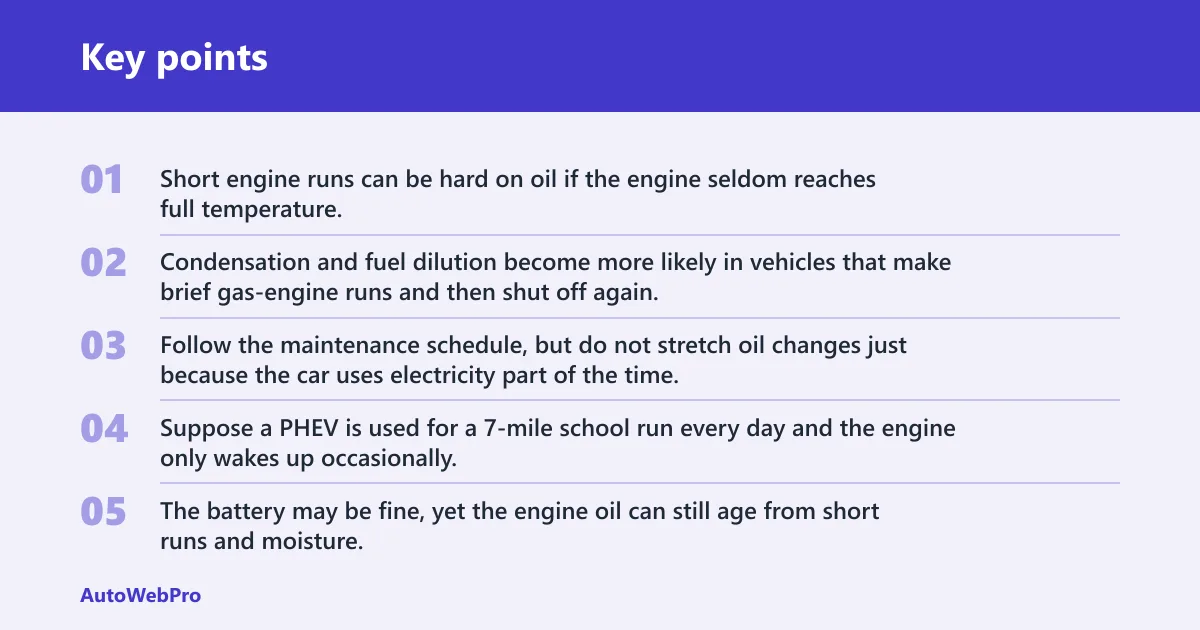
Short engine runs can be hard on oil if the engine seldom reaches full temperature. Condensation and fuel dilution become more likely in vehicles that make brief gas-engine runs and then shut off again. Follow the maintenance schedule, but do not stretch oil changes just because the car uses electricity part of the time.
Suppose a PHEV is used for a 7-mile school run every day and the engine only wakes up occasionally. The battery may be fine, yet the engine oil can still age from short runs and moisture. In that case, time-based oil changes matter more than mileage alone.
What happens when fuel sits too long
Fuel can age if the car rarely runs on gasoline. That may lead to rough starts, stale-fuel odor, or drivability complaints after long periods of electric-only use. Fresh fuel and periodic engine operation reduce that risk.
Where charging hardware can fail
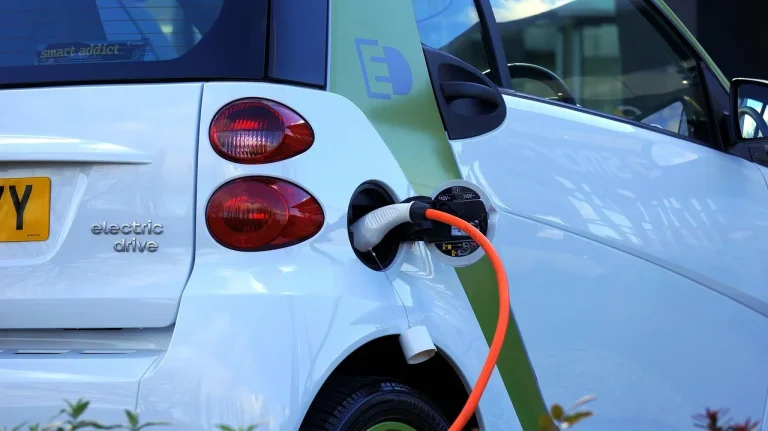
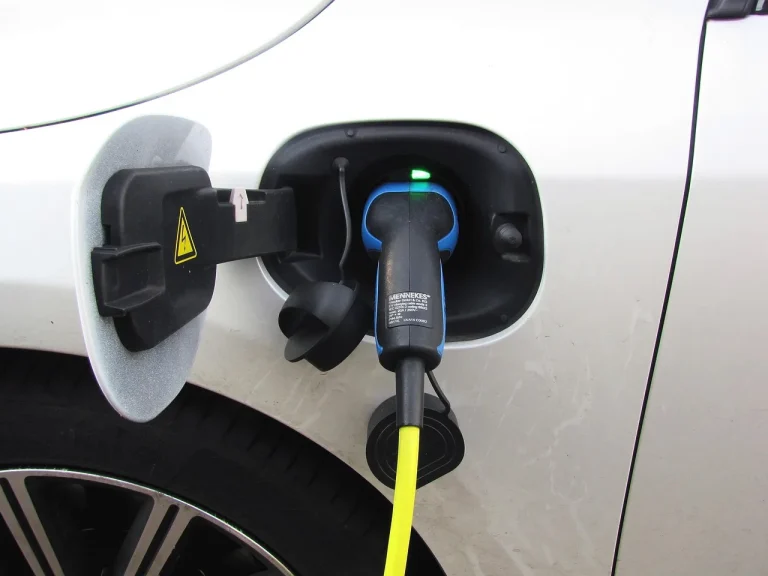
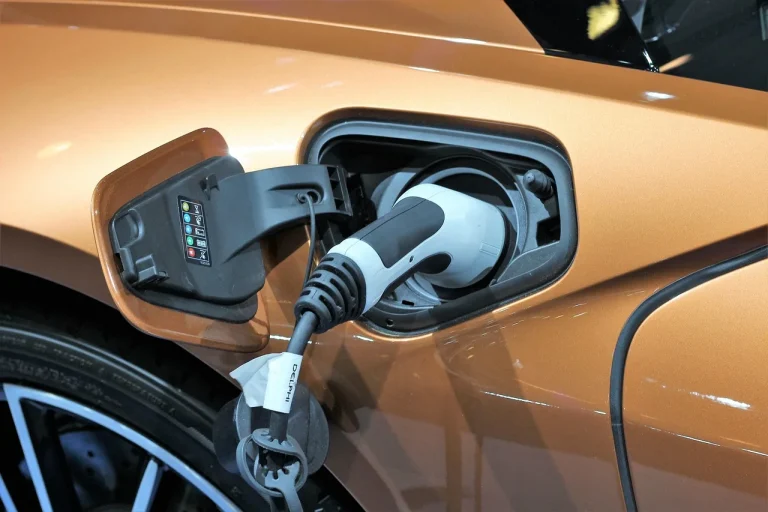
Charging hardware adds convenience and another set of failure points. The onboard charger converts AC power from a home or public station into what the battery can use. The charge port, inlet pins, latch, and communication electronics all need to work for charging to start and finish normally.
Onboard charger and charge-port issues
Most PHEVs are commonly charged from AC rather than high-power DC fast charging. Charge rates are often modest, which is normal for the class, but a weak onboard charger can still make a car annoying to own. A damaged port or faulty control module can stop charging entirely or cause interrupted sessions.
Charging heat matters too. If a connector or cable runs hot, the system may slow or stop charging to protect itself. That is a reliability issue, not a convenience issue.
Cooling, heat, and software faults
The high-voltage cooling system protects the battery and inverter. If the pump, fan, thermostat, or valve system fails, the car may limit power or charging speed to protect itself. Hot-weather reliability depends on how well the cooling system keeps temperatures in range.
Software also matters. A PHEV with old firmware or open recall work can throw false warnings, refuse to charge, or manage thermal limits poorly. Used buyers should check software history and recall completion before trusting the car.
What happens if you never charge one?
If you never charge a plug-in hybrid, it still functions, but you lose much of the reason to buy one. Fuel use rises, electric range sits unused, and the extra battery weight becomes dead weight on most trips. Some owners also see more engine use than the car was designed around in normal PHEV operation.
Fuel use and wear changes
Without charging, the car leans on the engine far more often. That can raise fuel use compared with a charged PHEV and may increase engine start-stop cycling on short trips. The brake system may still benefit from regeneration, but the EV side is no longer doing the heavy lifting.
The main reliability loss is not one dramatic failure. It is the loss of the pattern that helps a PHEV age well: regular charging, warm engine runs, and balanced use of both systems.
Which reliability benefits you lose?
- Lower gasoline use on short commutes.
- More regular battery cycling, which keeps the system exercised.
- Better brake-pad life from regenerative deceleration.
- Fewer stale-fuel concerns from regular engine use.
Are plug-in hybrids reliable in cold weather?
Plug-in hybrids can be reliable in cold weather, but winter changes how they behave. Battery range drops, charging can slow, and the cabin and battery heater may draw more power. A car with weak thermal management can feel less dependable in winter even if the hardware is sound.
Battery temperature and charging speed
Cold battery cells accept charge more slowly and deliver less range. That is normal chemistry, not necessarily a defect. The question is whether the car handles that cold well enough to avoid nuisance warnings, poor charge acceptance, or repeated preconditioning problems.
Winter range and 12-volt strain
Winter can strain the 12-volt battery because the car may sit longer, accessories run more often, and short trips may not give the system enough time to recharge fully. Dead-12V symptoms include blank displays, no-start events, and random warnings before the car wakes up. A weak auxiliary battery can make a good PHEV look unreliable.
Common first-timer mistake: assuming the traction battery is the only battery that matters. On many PHEVs, a tired 12-volt battery causes more roadside frustration than the high-voltage pack does.
What to check before buying a used PHEV
Used-PHEV reliability depends on evidence. Service records, recall completion, software updates, charging-port condition, and battery-health clues tell you more than a shiny exterior or a long electric-range claim. A well-kept PHEV can be a smart buy. A neglected one can get expensive fast.
Review the service history. Look for regular oil changes, coolant service where required, brake fluid service, and any documented hybrid inspections. Gaps in routine maintenance matter because the engine and cooling system still carry load.
Check recall and software records. Confirm that hybrid-system recalls, charging updates, and battery-management software updates are complete. Many charging or warning-light complaints trace back to software or calibration issues.
Inspect the charging port. Look for bent pins, heat discoloration, moisture, or a loose latch. Then test an AC charge session long enough to confirm that the car starts, continues, and completes charging normally.
Test the 12-volt system. Start the car cold, cycle accessories, and watch for slow boot-up, dim screens, or warning messages. A weak auxiliary battery is a common source of false alarms and no-start complaints.
Ask for battery evidence. Range estimates, battery reports, and any dealer scan data are useful. If the seller cannot explain charging habits or battery condition, treat that as a red flag.
Frequently asked questions
Are plug in hybrids reliable?
Yes, many plug-in hybrids are reliable when they are charged regularly, serviced on schedule, and kept free of unresolved recalls. Reliability drops when the 12-volt battery ages out, the charging system is ignored, or the car is used in a pattern it was not set up for. Brand and model still matter.
What are the most common plug in hybrid problems?
The most common issues are 12-volt battery failures, charging glitches, hybrid-system warning lights, software faults, and occasional onboard-charger or inverter trouble. Some owners also see battery-range loss, especially in hot climates or after years of use. Many of these are manageable if caught early.
How long do plug in hybrid batteries last?
Many plug-in hybrid batteries are built to last for years, and most manufacturers warranty them for 8 years or 100,000 miles, sometimes more depending on market rules. Actual life depends on heat, charging habits, mileage, and how often the car sits unused. Capacity usually fades before a full failure.
Do plug in hybrids need more maintenance than hybrids?
In practice, they can need similar maintenance to a regular hybrid plus extra attention to charging hardware and software. Oil changes, coolant checks, tires, brakes, and 12-volt battery care still matter. If the PHEV is rarely charged or mostly used on short trips, engine-related maintenance can matter even more.
What happens if you never charge a plug in hybrid?
You lose much of the fuel-saving benefit and can add wear to the engine side because it runs more often than intended in normal PHEV use. Fuel economy drops, fuel can age, and the battery system does less useful work. The car still drives, but it is less efficient and less appealing.
Are plug in hybrid batteries expensive to replace?
Often, yes. A traction battery replacement can cost several thousand dollars and sometimes much more, depending on the model and pack size. That does not mean a battery failure is common, but it does mean used buyers should check battery-health evidence, warranty coverage, and charging history before committing.
Which plug in hybrids are the most reliable?
The better question is which specific model-year and trim have strong service records, complete recalls, and proven battery and charging behavior. Reliability surveys and owner data can help, but the best choice is the one with documented maintenance and no open hybrid-system issues. Condition matters as much as nameplate reputation.
What are the best plug-in hybrids?
The best plug-in hybrids for reliability are usually the ones with a clear service history, a healthy battery, a working onboard charger, and a clean recall record. For shoppers, the right choice is less about a best-ever list and more about a specific car that fits the daily charging pattern it will actually see.